IMPORTANT NOTE: These are the archived stories for Belmont News & Achievements prior to June 26, 2023. To see current stories, click here.

Home Blog Page 69

Physical Therapy Students Volunteer at Celebrity Golf Shootout to Benefit Nashville Rescue Mission

On April 19, students from Belmont’s School of Physical Therapy volunteered for the First Annual Tracy Lawrence Mission Possible Celebrity Golf Shootout to benefit the Nashville Rescue Mission. Students along with their faculty advisor Dr. Mike Voight arrived early in the morning to help set up the guest registration area and prepared the on-course refreshment stations. Shortly thereafter, 30 teams of golfers along with more than 40 celebrities from stage and screen began arriving for a day of golf and fellowship. 

During the event, many of the students served as marshals / witnesses for various on-course challenges that included cars/trucks for a hole-in-one as well as a final shootout for $150,000 in cash. The day finished up with an informal acoustic concert given by the various musical celebrities who had participated during the day. 

At the end of the day, the real winner of the day was the Nashville Rescue Mission as more than $225,0000 was raised to help feed the homeless. Tracey Lawrence, Kid Rock and PGA tour player John Daly all publicly praised the students and personally thanked them for their help in making this event a success and have already begun planning for a bigger and better event next year.

Hughes Receives Board Certification as Medical Affairs Specialist

Sally Hughes PharmD, RPh, BCMAS, is currently in her two-year post-doctoral fellowship in Clinical Management with HealthTrust and Belmont College of Pharmacy. Recently, she was able to pursue a board certification as a medical affairs specialist to further her experience and career options in the pharmaceutical industry with the Accreditation Council for Medical Affairs (ACMA).

Dr. Hughes achieved the Board-Certified Medical Affairs Specialist (BCMAS) certification from ACMA in May of 2021 and believes that it will open new doors and provide her with more in-depth industry training that is needed to excel in the medical affairs career path. The BCMAS certification is internationally recognized, and achieving the BCMAS demonstrates the ability to uphold global standards to the highest degree. By the end of the fellowship, she hopes to be a medical science Liaison for a pharmaceutical company and return to Washington.

Belmont University, Nashville Opera Announce Epic Masterwork in New Performing Arts Center

As part of a preview of Nashville’s newest performing arts space, Belmont University and the Nashville Opera announced today that Richard Wagner’s masterwork “Das Rheingold” would close out the Opera’s 2021-22 season in a special showing in the campus’ new performing arts center. Scheduled to open this fall, the new 1,700 seat venue will be hosting what is believed to be the first fully staged production of this monumental epic in Nashville. The performing arts center’s main concert hall, which is fashioned after traditional European opera houses, has a horseshoe shape and will be acoustically designed to provide an optimal listening experience to all audiences. In addition to supplying Belmont’s nationally renowned performing arts students with a unique learning environment, the new hall will also add another diamond to Music City’s ring of world class venues as it caters to diverse audiences with major concerts, plays, operas, special lectures and other performances.

“When we began construction two-and-a-half years ago, I was intent on fulfilling the charge that I had been given by Belmont Board Chair Marty Dickens to build a facility that would be the finest performing arts center on any college campus in the world because that’s what our students deserve,” said Belmont President Dr. Bob Fisher. “Thanks to the good work of our architectural and construction teams, I believe even my wildest dreams for this venue are being exceeded. I can’t wait for our students and the broader Nashville community to experience all this performance hall has to offer, and I’m thrilled to have the Nashville Opera partner with us to premiere ‘Das Rheingold’ in this space.” 

The grand opening of the new performing arts center is currently anticipated to occur with the Dec. 1 filming of the annual “Christmas at Belmont” concert, featuring more than 800 student musicians and vocalists in a performance nationally broadcast on PBS for the past 18 years. Located between Belmont’s Massey Performing Arts Center, Curb Event Center, Curb Café, Troutt Theater and McAfee Concert Hall, the new facility completes a performing arts district along Belmont Boulevard. Moreover, the new hall promises ultimate adaptability with design features that make it a perfect fit for a wide variety of functions, from both acoustic and amplified music concerts to theater and dance performances and broadcast events.

ESa’s David Minnigan, the principal architect on the project, added, “The acoustic design of the new main hall draws upon the rich history of the form of the beloved opera houses of the world, including Buenos Aires – Teatro Colon, Teatro Alla Scala in Milan and Paris’ Palais Garnier to name a few. At the same time, the latest concepts and technologies in multi-use hall acoustic design have been fully integrated into the neoclassical architectural language that is dominant at Belmont University. One prominent example is the hall’s dome; traditionally a plaster element, this ornate ceiling element in the auditorium has been made sound transparent, allowing for extended room reverberation for orchestral concerts. Above the dome is a series of acoustic features that can be selectively deployed to fine-tune the acoustics for specific programs — from fully amplified concerts to orchestral, opera and theater — all without changing the aesthetics of the room. We look forward to the upcoming commissioning and acoustic tuning sessions with our acoustic and theatrical design partners (akustiks and Theatre Projects) that will start later this summer and continue into the fall.” 

The performing arts center also extends Belmont’s desire to be “Nashville’s University” as partnerships with local arts organizations will be an integral aspect of the facility’s identity. The May 2022 Nashville Operacollaboration on Richard Wagner’s epic “Das Rheingold” is the first to be announced and is anticipated to draw talent and audiences from around the country.

Nashville Opera Artistic Director John Hoomes said, “We are delighted to partner with Belmont University to bring a fully staged performance of Wagner’s ‘Das Rheingold’ to the Belmont University Performing Arts Center during its inaugural season. The Center is an important addition to the cultural landscape of Music City, and we look forward to seeing it become a hub for community partnerships such as ours. Much care has been taken to create a performance hall with extraordinary acoustics, and I am thrilled to have selected an operatic masterwork that will show off the space to full advantage, while also drawing in a regional audience to experience all that this new venue has to offer.”

Richard Wagner’s “Das Rheingold” is the first of four operas comprising The Ring Cycle. Wagner’s music is seared into the pop psyche as the soundtrack for the famous helicopter scene in Apocalypse Now, and that same power infuses “Das Rheingold” (The Gold of the Rhine River). Wagner’s intense, extended one-act draws from Norse mythology and German folklore to weave a story of gods, giants and an epic heist of precious gold—for the forging of an all-powerful magic ring. Characters are represented by unique musical themes (leitmotifs), which are combined throughout the opera to bring the story to life. 

While every performance in the new space will be a considerable draw, the building itself will prove its own attraction as acute attention to detail makes this project particularly impactful. Throughout the Performing Arts Center, visitors will find elaborate details and special touches that further enhance the beauty within and symbolize uniquely Belmont traits. A few highlights of the new performing arts center include:

  • Variable acoustic system within the hall includes curtains placed in wall pockets that can be deployed to manage audio needs, or literally tune the room, for different events
  • Three-story Grand Lobby designed to host banquets, galas and special events for up to 900 guests 
  • The side recital spaces can be individually cordoned off for separate acoustic or amplified smaller performances, or—since both areas feature floor space as large as the main stage—each can also be used as viable rehearsal spaces
  • Flexible stage, lifts, rigging and lighting in the main hall provide maximum adaptability
  • Top of the line theatrical equipment will give superior visual and acoustical experiences
  • Innovative orchestra pit accompanied by two lifts allow the pit to be extended above, below or flush to the stage depending upon the production
  • Ten-foot wide oculus lay-light medallion with ornate glasswork and intricate lighting details add a striking element to the performance hall dome 
  • An acoustically transparent domed ceiling, constructed of ornate plaster and metal grillwork, allows sound to travel up into the attic volume before being diffused, or absorbed, depending upon the nature of the event

Additional events for the hall’s inaugural season, along with a fall dedication ceremony, will be announced at a future date.

Variety Includes Belmont University in List of Top Film Schools from Around the World for 2021

Belmont University is included again this year in Variety’s cultivated list of the Top 50 Film Schools and Instructors from Around the World.

The list notes how quickly Belmont’s Motion Pictures Department has grown and seen success since 2013 in both Nashville and Los Angeles. The school’s collective 200 students are taught by 10 full-time faculty members and about 20 additional staffers in classes such as directing, writing, creative producing, screenplay analysis, cinematography, set management, film history and genre studies, among others. Variety says, “With new film and television writing majors on the horizon and a 2020 merger with Watkins College of Art, Belmont’s Johnson Center facility in Nashville received multiple upgrades, including a full-size Dolby Atmos mix theater, three Avid S6 consoles as well as storage, software and server space.”

Variety’s article discusses the transition of most film and digital arts programs worldwide to rely on online models of instruction as the COVID-19 crisis continued. However, “centers of higher education continued to nourish ingenuity in the arts.”

Chair of the Motion Pictures Department Will Akers explained how Belmont successfully worked through a difficult year. “In Fall 2020, because COVID was not well understood, we made the difficult decision to cancel our mid-level filmmaking classes,” he said. “Over the winter holiday break, we installed 87 remote Avid Media Composer and Pro Tools workstations, allowing our students to log in and edit their films from anywhere. In Spring 2021, we were able to run a full production slate and, due to the stringent protocols instituted by our faculty, no students, teachers or actors got sick on over 200 productions.”

Dean of the Curb College of Entertainment and Music Business Doug Howard said, “I am proud of Will Akers, our students and the entire Cinema, Television and Media faculty team for working so hard to maintain world-class standards during this challenging year. Also, I thank our University senior leaders for their support and for allowing us to implement new technology that allows our students to continue their courses and film projects whether working on campus or from a remote location.”

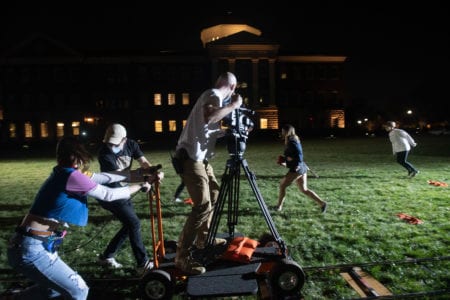
students using film equipment
Film class learns about outdoor lighting around the Johnson Center at Belmont University.

Variety pointed out the film schools from the list and their faculty continued working diligently to help aspiring filmmakers, be they producers, screenwriters or directors, to hone their respective crafts no matter the challenges facing the industry. As Variety states, “Students at these schools will likely emerge to become the superstar creators of the TV series, indie films and tent pole movies of tomorrow.”

Akers said, “We are extremely pleased to be on a list with such amazing schools from around the world, especially at the end of such a long and difficult year. The students required more care, productions needed more attention, and the hours of work generated by our talented and dedicated faculty make this recognition all the sweeter.”

Dr. Devon Boan Retires After 25 years at Belmont University

Dr. Devon Boan has spent the vast majority of his adult life at Belmont University – and he wouldn’t have it any other way.

“Belmont has gone through enormous change, and it’s fascinating what we’ve become,” says Boan, who is retiring at the end of May after 25 years of service to Belmont. “Being a part of that change and growth has been a good place to be. Every day I was connected to the rich experience of the whole university. It’s what you hope to do in a teaching career.”

Boan came to Belmont in 1996 as the first full-time director of the Honors Program and credits the leadership of former and current Belmont faculty members Dr. Bob Grammar, Dr. Bob Byrd, Dr. Joyce Crowell, Dr. Ronnie Littlejohn and Dr. Maggie Monteverde, with the early formation of the program. Boan said, “Taking over leadership was humbling. So many marvelous people connected to the program had done enormous things with our students.” 

Ten years ago, Boan also created the Artist’s Studio track in Honors, which he says “trains students for careers in the narrative, visual or performing arts by providing an understanding of the context in which artistic works transcend fleeting popular interest and represent works of enduring artistic quality. By the end of their training in The Artist’s Studio, students are prepared to produce a senior project of professional quality in their own artistic fields (such as a novel, a symphony, a screenplay or an art show).”

Created as a response to the growing number of budding artists coming through the Honors Program, Boan says the intention of the Artist’s Studio track was to teach those student artists about the historical and aesthetic demands of living the life of an artist.

Boan said, “There is always so much enormous creativity bubbling in the room at any given time with our students. The Artist’s Studio track helps students understand the kind of truth that art reveals about what is beautiful and true in the world.”

Says recent graduate Ridge Bethea, “The Artist’s Studio track in the Honors program has far and away been my favorite part of my experience at Belmont. I loved every single class I took with Dr. Boan and the opportunity to put so much time into this project has been life changing.”

Longtime Honors Program colleague Dr. Jonathan Thorndike noted Boan’s contributions to the Honors Program. “Dr. Devon Boan was instrumental in establishing a state-of-the art Honors curriculum that allowed students to design their own majors, pursue research and creative endeavors and become outstanding citizens and scholars. Belmont Honors students are the best of the best, and they became leaders on campus in so many departments as tutors, performers and research assistants. Dr. Boan guided students through classes, tutorials and colloquiums that gave them great aspirations and created space for intellectual and spiritual growth.

In his office in JAAC 3065, Boan has started going through the tools of his teaching profession and the memorabilia he has collected along the way. He is saving all of the gifts students have given him: the street sign that says Devon Drive, the class photos of former students, the books with student messages written inside.

During his tenure in Honors, Boan estimates that he has taught more than 2,000 students, including seven current Belmont faculty members, faculty at other universities and law schools, the lead attorney at Microsoft as well as the legal counsel and a staff member for two U.S. Senators.

Boan said, “My vision for our students was to see them grow into leaders of the next generation and live that out. I’m most proud of the Honors program that we produced – the curriculum that pushed students to be more than they knew they could be.”

Professor of Philosophy and Director of Asian Studies Dr. Ronnie Littlejohn, who was part of the hiring committee that brought Boan to Belmont, called Boan “visionary.”

“When Belmont decided to make a serious commitment to establish an honors program that would have a distinctive focus and create leaders who were formed though an original and creative academic experience, Devon was selected after a national search. He gave the program a real vision and his advocacy for the adventure of the learning processes that came to define the program changed the lives of hundreds of students.”

Dr. Bonnie Smith Whitehouse, Honors Program director and professor of English, says Boan’s contributions to the Honors Program are immense and ongoing. “The Honors Program we have today is built on the incredibly strong history and legacy that Devon established. That legacy is ongoing through the students in the program and the faculty he has influenced.”

In recent years, Boan also designed a course entitled The Romantic Allure of Falling Bombs: Literature and Love in World War II London for the Month in London study abroad program, twice teaching the course. Professor of English Dr. Maggie Monteverde, who leads Month in London, said, ”This program really requires that not just students but faculty function as a collegial group, willing to spend time with student and faculty colleagues through the duration of the program, and not just during class time. I will miss having Devon with us. One thing I valued that he did on that program was really get students out walking around, experiencing London by foot and underground, helping them understand the value of engaging in person with place while reading about it. “

Boan, a published author, playwright and critic, is looking forward to having more time to work on his current novel, The Fabulist D’Artagnan in Harlem. As Boan describes, D’Artagnan Moxley is mysterious even by 1939 New York standards: a 21-year-old writer for The New Yorker fresh out of the cotton fields of Mississippi (part Truman Capote, part Huck Finn) who gets into bar fights, is determined to befriend a dirt-poor civil rights maverick, hobnobs with the city’s most powerful social circle, and falls in love with too many women. And then there are those frightening stories he tells about his past and the unsettling feeling he’s not what he says he is. 

While Boan says he relishes the time he will have to be able to devote to his family and writing, he will also miss Belmont.

“I will miss the energy that goes on in the hallways – students stopping by, visiting with friends and peers in their offices; all of these people that came to mean so much to my life here at Belmont. I’m still loving my time with students. It will be hard to walk away from this.”


Turner First Recipient to Receive Delta Sigma Theta International Awareness, Involvement Heritage Award

Dr. Bernard Turner, professor and director of Belmont’s Center for Social Entrepreneurship, was recently recognized by the Delta Sigma Theta Sorority, Inc. with the Nashville Alumnae Chapter’s first International Awareness and Involvement Heritage Award.

Since its establishment, Delta Sigma Theta Sorority, Inc. has shown itself to be a public service organization confronting the problems and enhancing the lives of black and indigenous people of color in America and abroad. A wide range of programs addressing education, health, international awareness, economic development, social action and strengthening families have emerged and evolved over the years. These programs provide an extensive array of public service through the Sorority’s Five-Point Programmatic Thrust.

Through the International Awareness and Involvement (IAI) Thrust, Delta Sigma Theta Sorority, Inc. harnesses its vast potential to strategically impact the plight of people living across the diaspora. The sorority will continue to move International Awareness and Involvement forward in the 21st Century by strengthening its contributions and participation in Africa and Haiti.

The chapter took note of Dr. Turner’s commitment to and continued support of outreach ministry both at home and abroad via numerous mission trips to Haiti and Belize where health needs and other services are provided to local and international communities that may not receive medical attention otherwise.

Turner said, “I was surprised, humbled and appreciative to receive this award. I had no idea that this wonderful organization knew of my work. What an honor.”

In commemoration and celebration of the Chapter’s heritage as it celebrates its 91st anniversary this year, Bernard accepted his award at a presentation on April 10.

Alumna Meredith Bowden Reflects on Creating Lasting Change in the World

When Meredith Bowden first found Belmont, she was planning to audition for Musical Theatre, but after a trip to Cambodia her senior year of high school, everything changed. She knew she was called to do ministry. Having already had Belmont on her radar, she stumbled upon the social entrepreneurship program. She felt it was the perfect opportunity to turn her calling into her future career. The program taught strategies to create social change while simultaneously providing a background in business. Bowden described the program as, “ministry with a backbone.”

While at Belmont, Bowden was involved in Delight ministries and Greek Life as well as serving on Residence Life staff. She also paired her major in social entrepreneurship with a minor in religious studies. She recalled loving the intellectual stimulation she got from her classes. “You could take one paragraph from a book we were reading and just talk about it for hours.” As she went through her programs, she felt her worldview was greatly expanded and was confident in her abilities to create social change in whatever role she would take on in the future.”

Bowden found a position at Exile International through the Belmont work-study page. She began interning there part-time as a junior. With each passing semester, she found herself routinely asking to come back, which Exile was happy to accept. During her senior year, she was asked to come on as a part-time administrative assistant rather than as an intern. Bowden graduated from Belmont as the COVID-19 pandemic began to unravel. At the time of graduation, she had another full-time job in the works, which fell through as a result of the pandemic. As her first offer fell through, a full-time job at Exile opened up that had not been previously available. In July, she returned to Exile as a full-time employee, she laughed recalling, “I just couldn’t stay away!” 

Exile International is an organization that serves rescued child soldiers and children orphaned by war in Africa. Wars in DR Congo and Uganda have left four million children orphaned and 100,000 abducted from their families. Children as young as seven are taken from their families and forced to fight and kill for rebel armies. Exile works to heal the mind, body and spirit of these children through art-focused trauma care and holistic rehabilitation. Administrative operations are done in the US, but all the work done in Africa is conducted by Africans living in the communities that they serve. Bowden shared, what makes Exile unique to other organizations is that it “champions leaders and counselors from African communities. It’s about restoring Africa from the ground up, and to do that effectively, it has to begin with Africans.”  

The organization has found incredible success in somewhat unexpected ways. Graduates of the program continue to come back to Exile, asking to establish new care programs. It’s what they call the Multiplier Effect, and it’s led to exponential growth. In 2020, 29 of its 38 care programs were led by graduates, proving the Exile model is sustainable, cyclical and effective.  

“I left Belmont with open hands, ready to fill whatever gaps there were in the world for me,” Bowden stated. She attributes her passion for rehabilitative work to the time she spent deeply investing in Exile. Being involved in a wide variety of things is important, but it’s also important to dig deep into the things that call to your heart. “The areas where I dug my feet in, stuck it out and put a lot of energy are the areas I got the most out of. At Exile, I got a community, a part-time job, a full-time job and a sense of purpose.”

Bowden encourages others to dig deep in the things that they care about. “Passion isn’t something that just comes to you; it’s something you seek out and practice.”

Belmont Business Faculty Publish Papers in Review of Black Political Economy

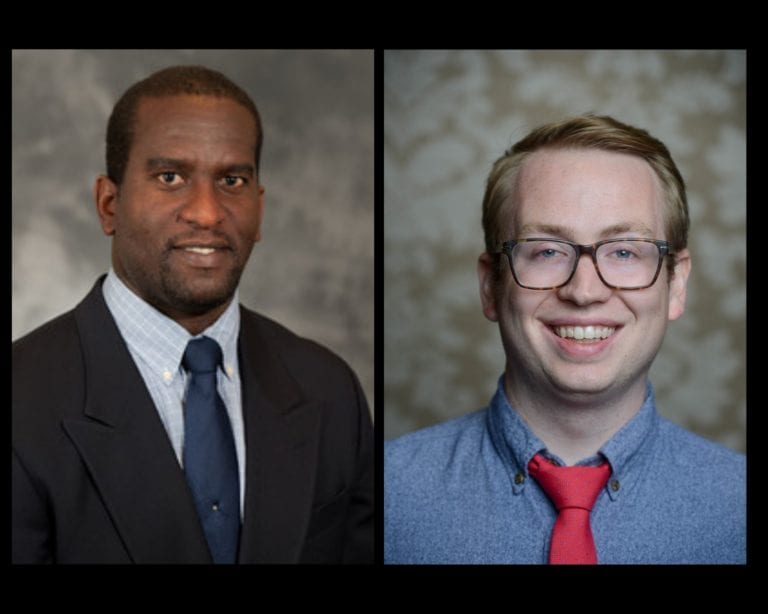
Two economics faculty in the Jack C. Massey College of Business — Dr. Colin Cannonier and Dr. Luke Petach — recently published papers in The Review of Black Political EconomyThe published articles are part of a special volume, “Criminal Justice Reform: 2020 and Beyond,” which is intended to provide readers with a fascinating set of papers, but also to serve as a great way to commemorate the death of George Floyd and other events of the past summer.

In the paper titled “The Impact of a Reentry and Aftercare Program on Recidivism,” Cannonier and co-authors (which include a Belmont student) explore the impact of a reentry and aftercare service program on the likelihood of returning to prison by ex-offenders in Tennessee. Using administrative data within a difference-in-differences design, they find that this social program is associated with a reduction in recidivism rates. Benchmark estimates show that the program was associated with estimated reductions in the probability of recidivating of 6.0 to 8.7 percentage points or the equivalent of effect of 15.8-19.2 percent. The program helped to reduce recidivism among Whites but not Blacks; older participants were the main beneficiaries while the effectiveness of the program was observed among older participants. Back-of-the-envelope cost-savings analysis is incorporated to estimate the potential savings to the state arising from the reduction in recidivism rates likely attributable to the program. The results offer some implications for the role of faith-based social programs within the context of criminal justice reform to combat reentry of former inmates. They also provide a cautionary tale about the need to evaluate programs not just based on their overall effect.

In the paper “Local Labor Market Inequality in the Age of Mass Incarceration,” Petach and co-author contend that the rise of mass incarceration in the United States can be framed through  the  lens  of  stratification  economics,  which  views  race-  and  class-based discrimination as a rational attempt on behalf of privileged groups to preserve their relative status and the material benefits which that status confers. The authors are the first use local-level data set on incarceration rates by race to explore the relationship between income inequality, poverty, and incarceration at the commuting zone level from 1950 to the present. Consistent with Michelle Alexander’s hypothesis that expansion of the penal system and the rise of “tough on crime” policy were efforts by privileged groups to drive a wedge into working-class political coalitions formed out of the Civil Rights Movement, they find that labor markets with greater inequality experienced larger increases in the overall incarceration rate. They also find that relative rates of poverty play a key role in explaining differential effects of mass incarceration across race. Areas where White poverty rates were large relative to non-White poverty rates experienced no significant change in White incarceration, but an expansion of non-White incarceration. These findings have implications for policies related to economic and judicial systems.

The Review of Black Political Economy — peer-reviewed and published quarterly — is the leading outlet for research that examines issues related to the economic status of African-Americans and the African diaspora throughout the world. The journal promotes scholarship on economic inequality and provides a viable forum where scholars can express their views on matters of public policy relevant to the economic well-being of marginalized populations.

McGuire Presents Research at CPNP Annual Meeting

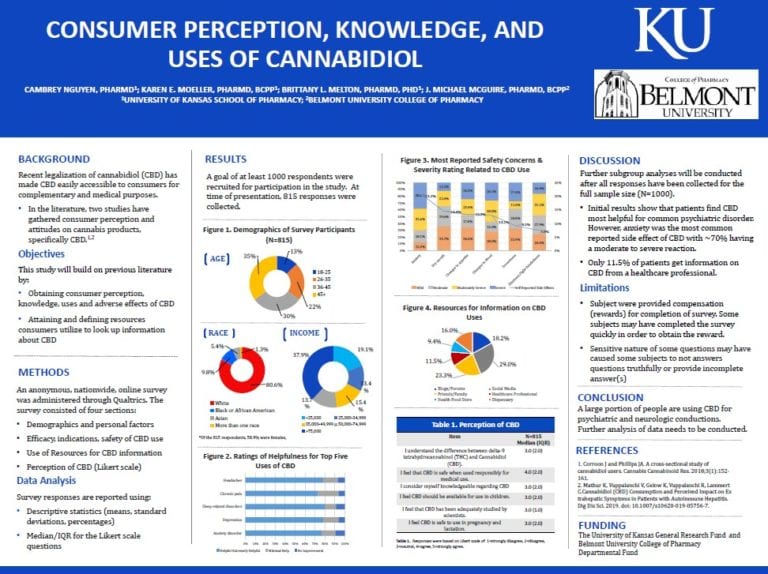
J. Michael McGuire, PharmD, BCPP, associate professor of pharmacy at Belmont, recently presented a poster with several faculty from the University of Kansas School of Pharmacy at the annual meeting of the College of Psychiatric and Neurologic Pharmacists (CPNP).

The poster, titled “Consumer Perception, Knowledge and Uses of Cannabidiol,” reported on findings from an anonymous, nationwide online survey administered through Qualtrics that consisted of sections about demographics, safety of CBD use, use of resources for CBD information and perception of CBD. Funding for the study was provided by the Belmont College of Pharmacy Departmental Fund and the University of Kansas General Research Fund.

The team found that a large portion of people are using CBD for psychiatric and neurologic conditions. The investigators noted that a high percentage of respondents reported significant adverse events with CBD products, but further analysis of data needs to be conducted.

Arnold Selected for Emerging CUPA-HR Leaders Program

Meg Arnold, director of organizational development at Belmont, is one of six College and University Professional Association for Human Resources (CUPA-HR) members who have been selected to participate in the 2021-22 Emerging CUPA-HR Leaders program.

The year-long program recognizes volunteer leaders from across the country who have demonstrated exemplary leadership and initiative within higher-ed HR and desire to play an active role in advancing the profession. The unique opportunity provides peer interaction and connection with CUPA-HR leaders as an integral part of the cohort’s learning experience. Participants engage in problem-solving work groups and develop deep networks with peers while gaining an inside look at CUPA-HR’s operations and structure.

Emerging CUPA-HR leaders are identified and nominated by CUPA-HR leadership at the region and national levels, and are selected based on their knowledge, leadership skills, engagement with CUPA-HR and demonstrated willingness to advance higher-ed HR.

Emerging CUPA-HR Leaders program facilitators include Leanne Fuller, director of human resource services at Auburn University; Theresa Elliot-Cheslek, vice president and chief human resource officer at Washington State University; and Julie Boggs, director of member marketing and engagement at CUPA-HR.

“We are excited to welcome this year’s Emerging CUPA-HR Leaders cohort,” says CUPA-HR President and Chief Executive Officer Andy Brantley. “These individuals bring a wealth of leadership experiences to CUPA-HR and to the profession, and we’re so fortunate to have them in the program this year.”

The 2021-22 Emerging CUPA-HR Leader cohort will serve until June 30, 2022.

Secret Link