Dr. Genevieve Lynn (Ness) Engle, associate professor in pharmaceutical, social, and administrative sciences in the College of Pharmacy, along with colleagues from Long Island University, University of Illinois at Chicago and the FDA published a current directory of U.S. based Drug Information Centers in the “American Journal of Health System Pharmacy.”
The manuscript, titled “Survey of Drug Information Centers in the United States 2018,” was an update to the 2008 directory and identified a total of 82 centers that met the definition of a Drug Information Center. Various characteristics of the centers were explored including affiliations with academic institutions and activities performed.
Each fall, the Belmont Office of Leadership Development (BOLD) hosts the Pulse Student Leadership Advance retreat. For the second year, Pulse returned to the Nelson Andrews Leadership Center, a facility built specifically for the development of leaders from across the world. What made this years’ experience so unique was that Belmont students helped plan and implement the full day of leadership workshops and activities for themselves. Pulse will now and forever be for students by students.
Staff from the Division of Student Affairs, the Office of the Registrar, Admissions and Vanderbilt University facilitated various leadership sessions focusing on the importance of creating a spirit of community that acknowledges individual excellence and celebrates values and victories. Students collaborated alongside staff to ensure that the event achieved its goals and was impactful for all participants. The leadership behavior students learned and practiced was to “Encourage the Heart” from “The Student Leadership Challenge” by James Kouzes and Barry Posner.
Students strategically planned and selected their
responsibilities for the day. Graduate students participating in BOLD’s GOLD
Experience- (Graduate Opportunities in Leadership Development) from the Sport
Administration and Organizational Leadership programs curated and developed the
curriculum. Students presented innovative ways to engage participants during
Pulse and challenged the norms of what would normally be expected during a
student retreat.
There was something for everyone during Pulse. Between leadership sessions, there were live student performances by the fireplace, Pete’s Party Room for those who needed a chance to dance off the worries of the semester and exclusive opportunities for students who wanted to prepare for positional leadership roles in BOLD, FitRec and ResLife.
In a post assessment survey one student stated that they “personally connected with the Self-Compassion session and loved the live music at lunch and dinner.” Other students expressed how they enjoyed the free time they had to build friendships and appreciated learning more about how anyone could be a strong encourager.
Needing no formal position or title, BOLD participants eagerly served in every way possible as photographers, program coordinators, hosts, a tech team and as “hype-gators,” a term students coined to describe leaders who regulated positivity, encouragement, motivation and hype throughout the day.
Now with 810 students actively pursuing their certificate in leadership through BOLD in just over one year, Pulse allowed students the opportunity to celebrate their progression through the first two levels of engagement – Belonging Aspiring Leaders and Believing Emergent Leaders. 2019 Pulse participants, students from nine academic colleges, a variety of majors and every graduating class, have engaged in 70 hours of leadership development in BOLD, across campus and through a host of service and service-learning experiences.
The final two BOLD levels of engagement will be implemented in the Spring as the Vision 2020 strategic plan for leadership development comes to completion and Vision 2025 is set in motion. The next BOLD experience -The Campus-Wide Student Leadership and Bruin Link Fair – will be held on Monday, January 13, 2020 in partnership with the New Student Orientation and Student Organizations and Activities Offices.
To learn how to engage in leadership development through BOLD email bold@belmont.edu.
The Jack C. Massey Graduate School of Business is one of the nation’s most outstanding business schools, according to The Princeton Review®. The education services company profiles the school in its recently reported list, “Best Business Schools for 2020.”
Dean Dr. Jan Williams said the Massey College of Business is honored to be identified by The Princeton Review as one of the nation’s most outstanding business schools. “While many MBA and master of accountancy programs are experiencing enrollment declines, our numbers have remained strong due primarily to the close ties our faculty maintains with the healthcare, entertainment and other rapidly-expanding industries in Nashville,” he said. “Graduates often comment on the personal touch of a smaller university, coupled with the many opportunities for active engagement with business. Our graduates credit the strong foundation they receive in our programs as a major factor in their rapid career advancement.”
The Princeton Review chose the schools for its 2020 list based on data it collected from surveys of administrators at business schools during the 2018–19 academic year.
The administrator survey, which numbered more than 200 questions, covered topics from academic offerings and admission requirements to data about currently enrolled students and graduates’ employment.
The Princeton Review’s student survey, conducted during the 2018–19, 2017–18 and 2016–17 academic years, asked students about their school’s academics, student body and campus life, as well as about themselves and their career plans.
One student was quoted saying, “Working professionals want to learn skills they can apply in the workplace, and Belmont caters to that goal. Here, ‘the classes are focused on real world topics’ and ‘the learning style is hands-on.’ In the classroom, ‘the program is largely case-based, encouraging students to use critical thinking skills and sharpen interpersonal skills,’ and across disciplines, ‘the professors encourage classroom discussion.'”
Another student adds, “[Belmont] is big enough to offer amenities and benefits of a large school, but small enough to still be a tight-knit group.” On this community-oriented campus, “fellow students, the professors and the school staff seem to sincerely care about me and each other.”
The Jack C. Massey College of Business at Belmont serves undergraduate, graduate and executive education students, providing nationally-recognized AACSB International accredited business education programs. The mission is to provide an innovative learning experience – both practical and discipline-based – by faculty who have industry experience and globally-recognized academic credentials.
The Curb College recently held a seminar titled “Influencing Culture Through Faith and Creative Excellence” to open a dialogue about how the word of God can be spread through a career in the entertainment industry. The seminar was part of an ongoing series created from the class “Influencing Culture As a Christian in the Entertainment Industry,” taught by Music Business Professor Mark Maxwell.
Musicians Tommee Profitt and Fleurie (also known as Lauren Strahm) were featured panelists for the conversation, moderated by Maxwell. Profitt is a producer, composer and songwriter best known for his ongoing work with rapper NF and his affinity for creating cinematic compositions. Profitt has been working for several years with Fleurie, an emerging artist with a knack for dramatic writing.
Both speakers discussed their path in the business and how they grappled with their faith throughout their careers. Many Belmont students can relate to Fleurie’s story. She began as a child who fell in love with music at church and found herself chasing the dream in Nashville years later. As she grew in her artistry, Fleurie began struggling to come to terms with the gift she was given.
“The stuff that was flowing out of me was never congregational music,” Fleurie shared. “It was always songs about life and processing things going on in my heart. I had this guilt of this religious spirit, I think, of like: if I really love God, why am I not writing these songs like worship leaders do?”
For Profitt, the dilemma came as he strayed from worship music and began seeing an abundance of opportunities in cinematic composition. It took a while for each of them to come to terms with the fact that the Lord was revealing His plan for their talents and that it can still be worship, even if it isn’t contemporary Christian music.
“His plan was to close those doors and open all these other worlds that aren’t necessarily worshiping God vertically the way worship music is,” Profitt said.
In addition to discussing
their faith, they shared advice with students on the importance of making
authentic relationships with people, rather than chasing fame. Profitt shared
the valuable reminder that you have to invest in who is around you, not who
you’d like to be around. “I didn’t get the opportunity to work with NF,” he
said. “He wasn’t NF when I met him. He was my buddy Nate.”
For students grappling with the path God is revealing for their passions and talents, Fleurie encouraged, “God is going to use you however He wants to, just stay planted and rooted in Christ.”
The panel offered students a powerful lesson on the importance of putting active work into their relationships, both with God and the people around them.
With a mission to educate, advocate and promote women in business, women in leadership and women forging and strengthening their careers, The Executive Learning Networks at Belmont University presented the inaugural Next Level Conference on November 20, which supported women in leadership roles asking “What is my Next Level?” and “how do I get there?”
Keynote speaker Betsy Myers is currently the founding director
of the Center for Women and Business at Bentley University. As a leadership
expert, author and advocate, she spoke about the changing nature of leadership
and the ever-increasing power of women.
Placing women in leadership roles is “no longer a nice thing
to do,” she said. “Women are now a business imperative and a competitive
advantage.”
With women making up 85 percent of all consumer spending, 60
percent of college graduates globally and 50 percent of all middle management
positions, the power they have is amazing and always growing. However, there is
still a ways to go, as women still only make up 10-15 percent of all senior
leadership positions. Talent has changed, and to recruit women, millennials and
global talent is a key ingredient to a thriving organization. Old work models
no longer work and many strategies for advancing women are outdated.
Her book, “Take the Lead: Motivate, Inspire, and Bring Out the Best in Yourself and Everyone Around You,” continues to be the basis of her work as her experience spans the corporate, political and high education arena.
As Executive Director of the Center for Public Leadership at
Harvard’s Kennedy School of Government, Myers focused the center’s teaching and
research around personal leadership. Senior adviser to two U.S. Presidents, she
was most recently the chief operating officer of the Obama Presidential Campaign
and chair of Women for Obama. During the Clinton Administration, she spent
several years at the U.S. Small Business Administration in posts that included
director of the Office of Women’s Business Ownership. She then moved to the
White House as President Clinton’s senior adviser on women’s issues and director
of the Office for Women’s Initiatives and Outreach.
Myers continued to talk about ways to focus on retention
through helping people feel engaged and making a connection between head and
heart. There is a move in leadership toward looking after the “whole person” with
care, kindness and authenticity. She discussed the idea of “covering” up true
parts of yourself at work, saying that “if you can’t be your whole self, you
can’t be your best self. Leaders must uncover first to set the example, or
nobody else will.”
These ideas and more were discussed in the many other workshop sessions available at the half-day conference, led by some of Nashville’s leading women in business.
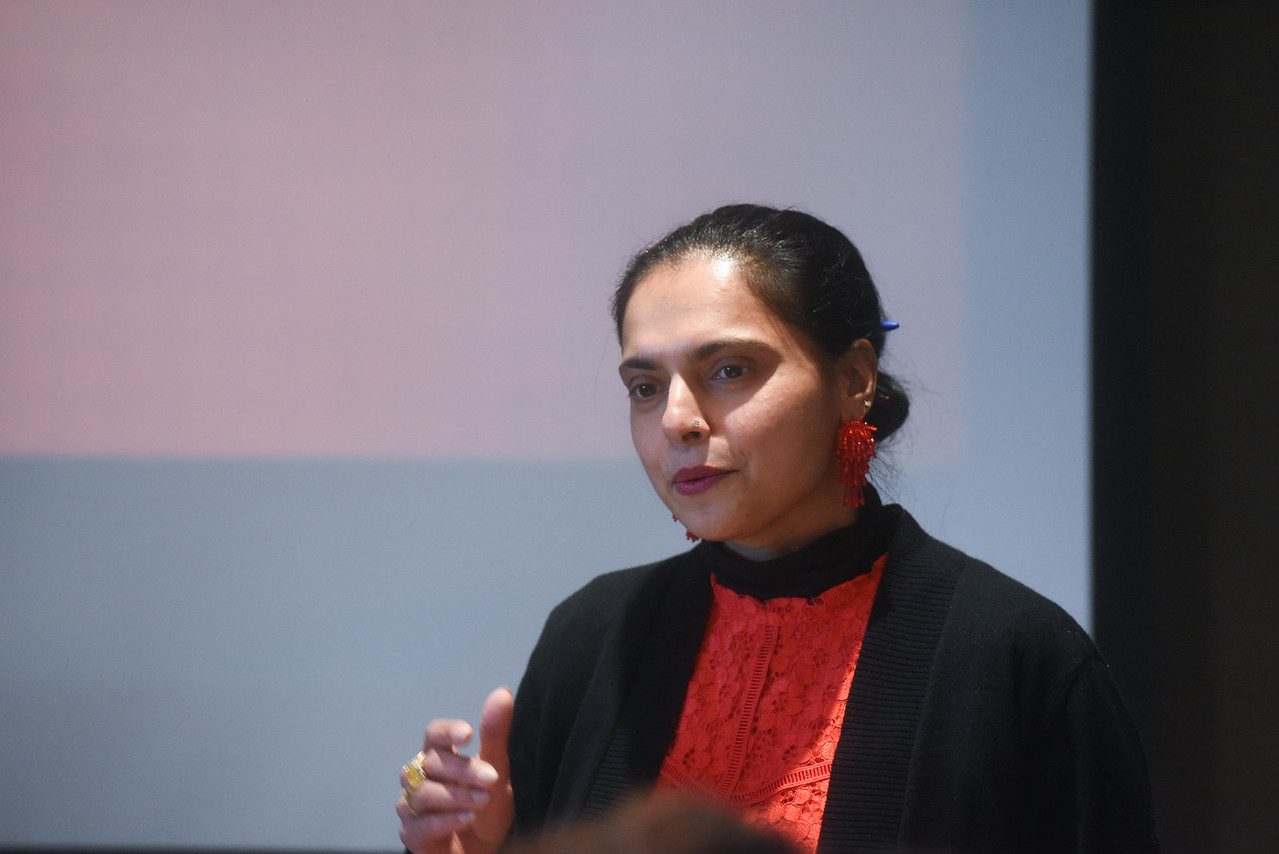
Celebrity Chef and Restauranteur Maneet Chauhan also addressed
the idea of connecting head and the heart with her session “Finding Common
Ground.”
Using the language of food to bridge cultures, genders and
socioeconomic backgrounds, Chauhan said the possibility for connectivity is
always there in any industry, you just have to find what the connection is. “Human
connection is what makes any business pleasant and fun. Everyone has a unique
way of finding common ground, I just found mine through food,” she explained. “Food
is the one thing that connects everyone. Wars should be discussed over a dining
table. Who can be angry when they are eating delicious food?”
She talked about her journey from growing up in her hometown
in India, attending the Culinary Institute of America, being a contestant and
frequent judge on the Food Network show “Chopped” and starting Morph
Hospitality Group, which is over Nashville restaurants like Chauhan Ale and
Masala House and Mockingbird. Her path started simply from her passion for food
and passion for eating, but there were no shortcuts to her success. She has
spent the past 20 years taking risks, exploring every opportunity that came her
way and sticking to her mantra while staying adaptable.
Maneet Chauhan at The Next level Conference
She said that women tend to question themselves a lot, but
it is important to remain generous with yourself and others as you work toward
goals. It is okay to make mistakes as long as you learn from them.
“Attitude is everything. We need to make the switch from
saying ‘can we’ to ‘WE CAN,’” said Chauhan. “And in closing, life is like a ‘Chopped’
basket; you will get four random ingredients, limited time, and you have to
create an award-winning dish.”
Other conference sessions included “Beyond Diversity and
Inclusion: The contextualization of authenticity, age, class, gender,
immigration status and race,” led by Juliana Ospina Cano of Conexión Américas, “Demystifying
Diversity & Inclusion,” led by Janessa Cox-Irvin, AllianceBerstein’s head
of diversity & inclusion, and “Please don’t interrupt. I was talking: A
look at gender bias in the workforce,” led by Robin Everhart, senior vice president,
chief human resources & transformation officer of Louisiana-Pacific
Corporation, among many others.
Along with the Belmont University Executive Learning
Networks, Next Level was sponsored by First Tennessee Bank, the Belmont
University Alumni Association and 3D Technology.
The Massey Boardroom was packed on Wednesday with students excited to hear this year’s Moench Entrepreneurship Lecture featuring Shiza Shahid, co-founder of The Malala Fund with Nobel Peace Prize winner Malala Yousafzai. Shahid shared her inspiring story of co-founding the Malala Fund, as well as her journey to success in entrepreneurship.
While growing up in Islamabad, the capital of Pakistan, terrorism and war in the country were increasing. Shahid longed to understand what was going on in society. So, she showed up at nonprofits and asked to volunteer. At a nonprofit organization that provided micro loans to women in poverty, Shahid volunteered writing case studies.
“Over and over again, I was struck by the power of women to transform their communities when given the opportunity to be entrepreneurial,” shared Shahid. “So, if there is a silver bullet in ending poverty, it is economically empowering women.”
At only 18 years old, Shahid moved to the United States to attend college with a scholarship from Stanford University. Surrounded by entrepreneurship and students pursuing entrepreneurship, Shahid saw that innovation in Silicon Valley was not coming from a global perspective. She explained that many entrepreneurs were building technology to take care of their own problems, such as laundry services and grocery delivery, rather than problems in places like Pakistan.
While studying at Stanford and becoming more curious about the intersection of startups and social good, things were getting much worse in Shahid’s hometown in Pakistan. There was a terrorist attack close to where her family lived and Shahid was constantly travelling home in the summer and winter to volunteer her time.
In 2009, a terrorist group linked to the Taliban had taken over a small town in Pakistan known as the Swat Valley and placed a ban on all female education. A sophomore at Stanford during that time, Shahid began to wonder what she could to do help. While doing research on the internet, she came across a diary written by a school girl in the Swat Valley writing about her experiences being denied education. The school girl wrote, “This is my plea to the world. Save my school. Save my Swat Valley.” The young school girl who had written the diary online was Malala Yousafzai.
That summer, Shahid returned to Pakistan and created a secret summer camp in Islamabad to provide Malala and 26 other young school girls with access to tools, resources and networks to teach the value of education. “Somehow, from my dorm room at Stanford, while drinking my Jamba Juice, I found a way to empower a little girl who would go on six years later to change the world,” said Shahid.
Upon graduating from
Stanford, Shahid began working as an analyst in Dubai for a global business
consulting firm called McKinsey & Co. “I combined my desire of a
well-paying, fast paced, prestigious career with my desire to have an impact in
places like Pakistan,” Shahid explained.
In 2012, Shahid had just landed in Egypt for a project she was working on and received a text message that she said made her heart stop. Malala had been shot on the bus on her way home from school by the Taliban. Two of her friends were also shot but luckily suffered injuries less severe than Malala. Shahid was devastated and immediately flew to the hospital in the United Kingdom where Malala was receiving treatment.
The story of Malala’s shooting gained traction in the news cycle, outraging people worldwide. Shahid knew that Malala was not a victim, but that Malala and young girls like her all around the world were change-makers fighting for a chance to go to school. “Malala made a near full recovery. It is the greatest miracle that I will ever witness,” she said.
Shahid decided to leave her job and fight for equality in education. She said, “What I’ve learned in making these difficult decisions is that when you do something that is difficult, you will be scared. You will be fearful. The more you achieve, the more anxious you feel. It is about learning to move forward.”
Shahid moved to New York with a suitcase and started an organization called The Malala Fund. The organization is a global nonprofit that has given more than $17 million in grants to educational organizations around the world, and it has mobilized significantly through works of advocacy.
“The thing about
entrepreneurship and change is that it is gradual. It is intimate. It is
grassroots. But sometimes, it becomes catalytic, which is something we cannot foresee,”
shared Shahid. People often asked her how to do something “big.” Her response
is, “You cannot do something ‘big.’ You can only do something and hope that it
becomes ‘big.”
Shahid is now the founder of a funding platform called NOW Ventures, dedicated to enabling startups with transformative solutions to creating a better world. The company combines positive social missions and values-driven founders with diverse backgrounds with an innovative business model enabled by core technology. Through this organization, Shahid has invested in companies such as Human Kind, Pachama and OurPlace.
From left to right: junior Abby Dugan, Shiza Shahid, junior Ansley Harmon
“As you can see, I’ve had many different careers and have approached my own search for meaning in many different ways. I’m definitely not done. I’m constantly asking, ‘What is it that I can be doing with my one wild and precious life?’ It will shift and change.”
In closing, Shahid urged students to recognize and take advantage of the privilege they possess and to stand for something they believe in. “Entrepreneurship is not just about building companies. Some of us will start companies, but I think what we’re saying as entrepreneurs is something else. I think that we’re saying we want to have meaning. We want to be creative. We want to come up with ideas, think about them and execute them from beginning to end. We want to have autonomy. We want to know that our lives mean something.”
O’More College of Design alumna Cassie Hutchins McLure recently launched Pine + Sapling with her sister. Pine + Sapling strives to provide like-minded mothers with an easy, eco-friendly wardrobe for her and her little ones. Through the end of 2019, the company is giving a portion of all sales to AMBUCS, an organization that provides therapy bikes to special needs children and adults.
Since graduating from Belmont’s fashion design program in 2015, McLure has thought a lot about the fast fashion industry and decided that she did not want to contribute to the negative impact it is making on people and the planet.
She explained, “We know the struggle to find time to simply do the basics, like showering and brushing one’s teeth as a mom. And it can take a lot of time to research these companies! We want to provide an easy, go-to place for moms to shop, knowing they can make a positive impact rather than a negative one.”
Being extremely close with her sister, McLure said, “We know each other’s strengths and quirks, and we aren’t scared to be honest with one another. But more importantly, our values are the same, and a business without a strong foundation in values isn’t much of a business after all.”
The first six months after graduation McLure spent thru-hiking the Appalachian Trail. “I felt the need to do something completely different. And to be honest, I was burnt out, creatively speaking. While I was hoping to find inspiration for my future career, it ended up being more of a spiritual journey than anything,” McLure said. “I look back on the past five years, and I see how the Lord has worked in my life by laying out what I need to prioritize, blessing me with opportunity after opportunity. I found my grounding spiritually first on the trail, which led me to marrying the man I hiked with, having a beautiful baby girl, Goldie, and working to establish myself in my career.”
Eco-friendly and ethically sourced product from Pine and Sapling
McLure explains that she has always been an opportunist and tends to say yes to most of the opportunities that cross her path. She shared, “As soon as Goldie was born, I was flooded with inspiration again! It was finally time to dive into this dream I’ve had since I was a little girl. I knew if I was going to be a part of this industry, we would strive to make a positive impact, or there was really no point in it for us. This is why sustainability and impact are two of our core values as a company.”
When asked about her time
studying at Belmont, McLure said, “My time at O’More
taught me a lot about how to process my inspiration into results. Inspiration
can be daunting at times but to understand the process and steps in creating a
clothing line or starting a business allowed me to see how my dreams could be
reachable.”
Pine and Sapling aims to be the go-to place that moms come to make conscious purchases. Currently, the company is researching brands that fit their values and aesthetic, but the goal is to create their own line in the next year or so to add to that collection.
Students, faculty and alumni can use the code “OMORE20” for a 20 percent discount at Pine and Sapling.
English Professor Dr. Eric Hobson was recently named contributing editor for the Pan American Historical Foundation (PAHF).
A member of the PAHF board, Doug Miller, extended the invitation based on “Dr. Hobson’s expertise in aviation’s early decades, his research into Pan American Airline’s history and his ability to write about this part of American history to wide-ranging audiences.”
Hobson intends
to use this unique opportunity to create further opportunities for Belmont
students to contribute to PAHF’s archival mission via text-based and
documentary-film projects.
Belmont Student Nurses Association (SNA) officers Hannah Burgtorf, Ally Hoffbaur, Annie Hiler, Miranda Nicholson and Nathalia Daniels worked with representatives from the American Red Cross to plan and host a blood drive on campus.
Held on September 10, the drive resulted in the collection of 75 pints of blood. Every two seconds, someone in the U.S. needs a blood transfusion.
Dr. Sandy Murabito, associate professor of nursing and undergraduate program director noted, “Health care professionals rely on available blood and blood products which lead to positive health outcomes. However only 3 percent of available donors give blood. Promoting blood drives with easy access is one good way to increase the Red Cross Blood supply. The Student Nurses Association is working to spread the word about this need. The Red Cross and the Student Nurses Association sincerely appreciate the donations from Belmont students, faculty and staff to give back to our community.”
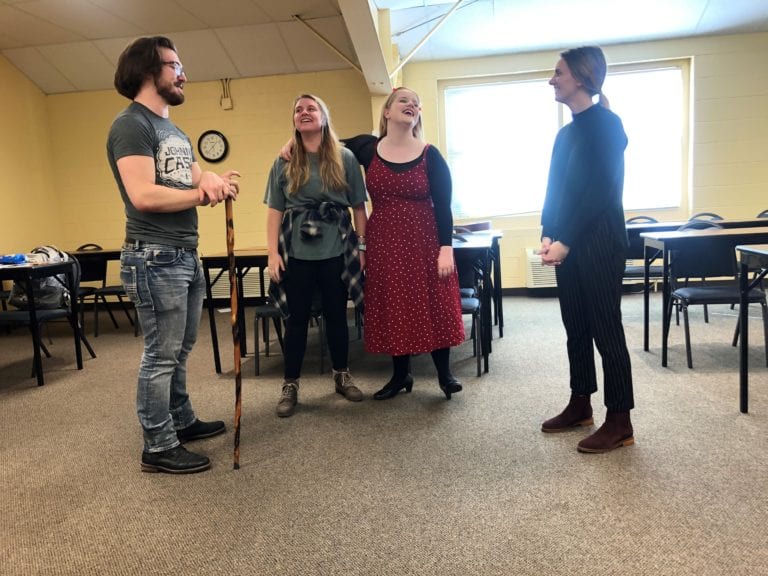
In October 2019, the Belmont University Repertory Company, known to students as RepCo, was featured in the online and print version of Dramatics Magazine in the article “Take the Show on the Road: Undergraduate Touring Opportunities.”
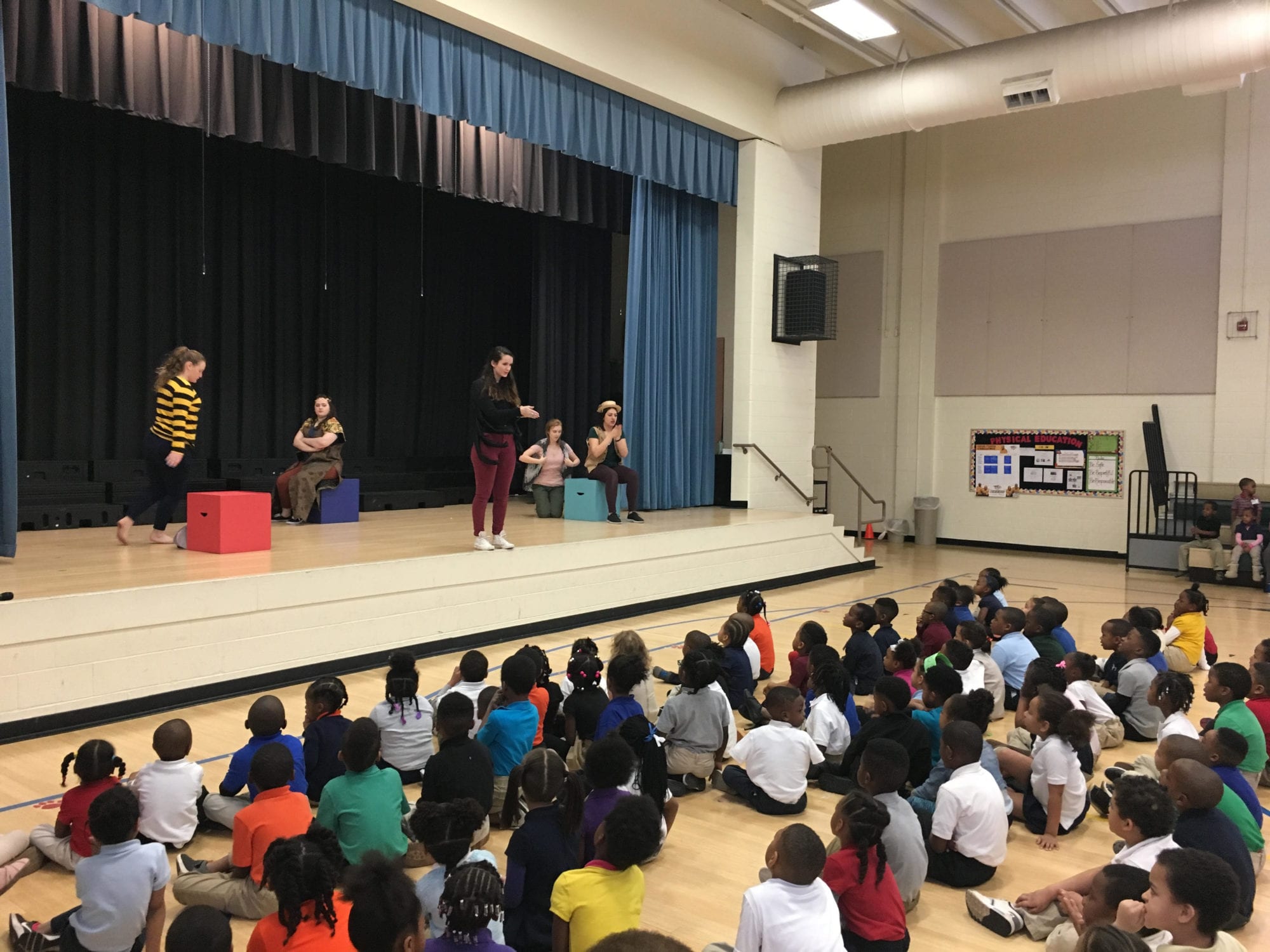
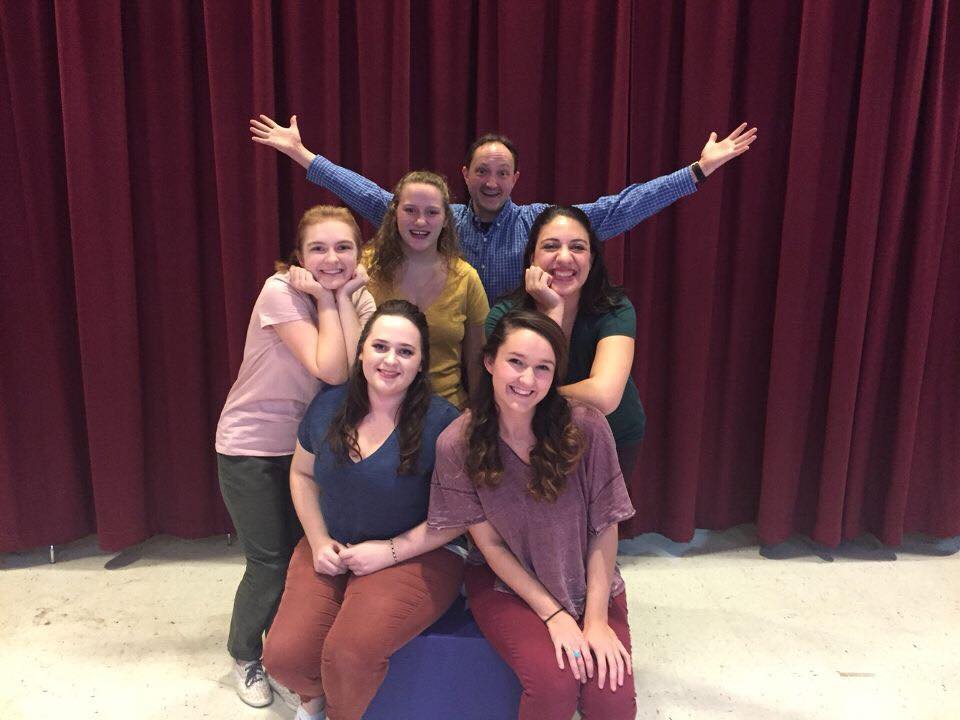
RepCo, made up of six of Belmont’s strongest student actors, design and directing students, is centered on community outreach and performs two theatrical shows geared toward children in local elementary schools every spring.
The Dramatics Magazine publications shared a quote from Erin Grace Bailey, a recent member of RepCo. “The focus of RepCo is to expose young audiences to different kinds of performing arts while teaching them important life lessons,” she said. “Original scripts (usually folk tales or myths adapted by Belmont faculty) are crafted to contain a lesson about empathy.”
Program Faculty Director Shawn Knight said, “RepCo makes the student performers feel responsible for giving a theatre education. There’s never a day that they don’t go perform somewhere and come back with some crazy-cute story about something a kid did. That is a kind of immediate response we don’t get in other types of theatre.”
The article also mentioned that Bailey valued the professional training in arts education, community outreach and bonding experiences with cast mates that she found through RepCo. But above all, she cited the benefit of seeing the kids’ reactions to the show. “One little girl came up to us after a show and said, ‘I want to be an actor, too, when I grow up, just like you!’ I’m pretty sure we all teared up.”
This year’s show is called “Seasons in the Smokies.” Public shows will be held January 25 and February 29 at 2 p.m. in Belmont’s Black Box Theater.