
IMPORTANT NOTE: These are the archived stories for Belmont News & Achievements prior to June 26, 2023. To see current stories, click here.

Home Blog Page 74

Belmont College of Pharmacy Hosts 5th Annual Antimicrobial Stewardship Symposium

Belmont University’s College of Pharmacy hosted the Fifth Annual Middle Tennessee Antimicrobial Stewardship Symposium on March 26 via Zoom. The virtual event attracted pharmacists, nurses, physicians, residents and students from across the country and Saudi Arabia to learn and discuss ways to work together as a medical community to improve appropriate antimicrobial use and mitigate risks. Featured speakers represented several states, and Vanderbilt’s Dr. Buddy Creech gave the keynote presentation – an update on COVID-19 vaccines.

Creech, MD, MPH, FPIDS is associate professor of pediatrics, Division of Pediatric Infectious Diseases, at the Vanderbilt University School of Medicine. He serves as director of the Vanderbilt Vaccine Research Program, principal investigator of the NIH-funded Vanderbilt Vaccine and Treatment Evaluation Unit, and co-principal investigator of the CDC-sponsored Clinical Immunization Safety Assessment Network. Dr. Creech’s research interests focus on the development and evaluation of new vaccines and therapeutics. He is currently leading COVID-related clinical trials at VUMC, including the evaluation of novel treatment options for hospitalized patients with COVID and trials of candidate SARS-CoV-2 vaccines.

Dr. Montgomery Green, associate professor of pharmacy practice at Belmont, said this year’s symposium was particularly meaningful and important to host in light of the current pandemic. “Participants in the symposium are all those who have been on the front lines since the beginning and have led their institutions and practices response based on their expertise. We were delighted to still be able to offer the program this year and gather together in a virtual format,” Green said. “The symposium highlighted the work that has been done by healthcare practitioners in various practices in response to COVID-19, as well as provided education on the vaccine. We were also able to continue with the previous mission of the symposium to share innovations in current practice in non-COVID-19 related antimicrobial stewardship activities and collaborate with those in the field. With attendees from Oregon to Rhode Island to Florida and Saudi Arabia, the event was truly an international gathering.”

The event was planned and hosted by Green; Dr. Kelly Byrge, assistant professor with Vanderbilt University School of Medicine, Dr. Shaefer Spires, assistant professor of medicine with Duke University, Dr. Kathryn Dambrino, assistant professor with Belmont School of Nursing, Dr. Athena Hobbs, infectious diseases clinical pharmacy coordinator with Methodist University Hospital in Memphis, Dr. Christopher Evans, pharmacist with the Tennessee Department of Health, Wiyanna Bruck, clinical pharmacist & assistant professor with South College in Knoxville, and Laura Hyde, continuing education administrator at Belmont.
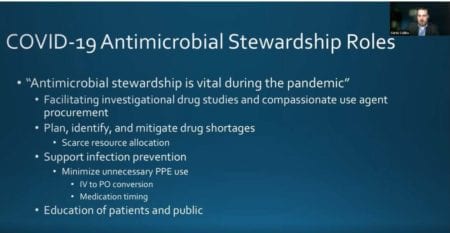
COVID-19 Antimicrobial Stewardship Roles

Although the COVID-19 pandemic presented a challenge, the planning committee ensured that the symposium would capture the same enthusiasm, connection and innovation that attendees have come to expect from the symposium each year. Although an in-person symposium was not possible due to social distancing restrictions, this year’s virtual symposium utilized a flexible and creative learning format to connect health professionals from across Tennessee and several other states who are passionate about Infectious Disease (ID) work and Antimicrobial Stewardship (AS). By sharing current evidence and clinical pearls, attendees learned from one another about the grassroots and community work that is happening in this field on a daily basis. As in years past, esteemed ID and AS experts from diverse professional backgrounds provided engaging and timely education via “podium,” roundtable and poster presentations. 

Morning sessions featured a lineup of experts. Timothy Gauthier, PharmD, BCPS-AQ ID, Antimicrobial Stewardship Clinical Program Manager at Baptist Health South Florida in Miami, Florida presented “Staying In the Know: How Healthcare Professionals Can Use Social Media to Keep Up With the Leading Edge of Medicine.” Jamie Kisgen, Pharm.D., BCPS, BCIDP, Pharmacy Manager, Infectious Diseases Services & PGY1 Residency Program Director at Sarasota Memorial Health Care System in Sarasota, Florida presented “Don’t Fall Into A Trap: How To Implement Vancomycin AUC-Guided Dosing In Your Hospital.” Curtis D. Collins, PharmD, MS, BCIDP, FASHP, Pharmacy Specialist – Infectious Diseases at St. Joseph Mercy Health System in Ann Arbor, Michigan presented “Unprecedented Times: Antimicrobial Stewardship and Pharmacy Response During the COVID-19 Pandemic.”

During the afternoon, participants attended roundtable and poster sessions led by pharmacists, physicians and nurses, allowing them the opportunity to discuss topics in a small group format. Topics included AS programs in emergency medicine and outpatient settings, strategies for outbreak management, various difficult case scenarios and telehealth, among many others.

Planning committee team member Dr. Kathryn Dambrino, Belmont assistant professor of nursing and nurse practitioner, said she is proud this year’s symposium offered an opportunity for connection and learning during a time when connection is scarce.

“By creating a space where individuals from varying disciplines could come together and share their unique knowledge and experiences related to infectious disease and antimicrobial stewardship, we hoped participants would leave the symposium feeling inspired and empowered to apply new concepts and implement new strategies at their respective programs,” she explained. “It is exciting to see more professionals becoming engaged in this field, and I believe this engagement will continue to facilitate innovative ideas that improve patient outcomes and healthcare system utilization.” 
Belmont Professor Hawley Published by Theopolis Institute

Dr. Scott Hawley, a professor in the Belmont Chemistry and Physics Department, was recently published by the Theopolis Institute for his article “Embracing Embodied Solitude After Techno-Gnostic Failure.” The Institute hosts periodic “Theopolis Conversations” which includes a month of invited authors to respond to an original essay published by the Theopolis Institute

Hawley was one of five interdisciplinary authors chosen to contribute to the conversation on Theopolis Institute. He received this opportunity through Technology and culture columnist Michael Sacasas who was writing a response for the Institute and suggested that Hawley be invited as a possible respondent.

Sharing his admiration for the other authors he is in collaboration with on this project, Hawley said, “These other authors, much more seasoned, facile and established than myself, are amazing, and their essays are superb. My being invited to participate in this, I’ve likened it to being a teenager waiting outside a Dream Theater concert and being invited up on stage to play with the band.”

Belmont Vision Achieves Eight Awards at South Eastern Journalism Conference

The 2021 Southeastern Journalism Conference was a moment of victory and success for The Belmont Vision this weekend. The award-winning college news team brought home eight awards, including six individual awards this year. 

Dorren Robinson, Belmont instructor of media studies, attributed this success to the rigorous journalistic training offered at Belmont. “I think our students get the training that they need to go out into the world and be successful journalists, and I think SEJC is proof of that,” she said.

The award ceremony, which was held over Zoom due to COVID-19, featured 39 schools in the southeastern region of the country. Each award was given based on the content published on the Vision site from November 2019 to November 2020. 

The team’s Editor-in-Chief Justin Wagner placed in three categories and won fourth place for College Journalist of the Year. Additionally, he won fifth place for Best News Writer and third place for Best Opinion Writer. 

Other awards included Managing Editor Kendall Crawford who won first place for Special Event Reporter/Editor and third place for Best Feature Writer and junior Abigail Bowen who won seventh in Best TV Journalist. 

The University as a whole placed fourth in Best Video News Program and sixth place for Best College Website. Read more of The Vision’s award-winning content through their website.

Belmont University School of Nursing Introduces Early Entry Program for Graduate Nursing Degree

The past year has put an even greater strain on an already-understaffed healthcare industry, and the demand for nurse practitioners continues to grow rapidly across the country and the state. The Tennessee Department of Labor and Workforce Development predicts there will be the need for more than 6,000 nurse practitioner jobs by 2024, growing nearly 4 percent every year. As many nursing schools across the country are struggling to expand capacity to face the shortage of nurses, Belmont University is now offering a new program to help meet this demand.

High-achieving Bachelor of Science in Nursing (BSN) students are now eligible to get a head start on an advanced nursing degree from Belmont by completing approved graduate level courses within their undergraduate program of study. The Early Entry Program provides the opportunity to earn up to 14 credits toward either a Doctor of Nursing Practice (DNP) or Master of Science in Nursing, saving students time and money in a graduate degree designed to prepare them to be Family Nurse Practitioners (FNP).

According to the U.S. Bureau of Labor Statistics, overall employment for nurse anesthetists, nurse midwives and nurse practitioners is projected to grow 45 percent from 2019 to 2029, much faster than the average for all occupations. Several factors contribute to this demand, including an increased emphasis on preventive care and demand for healthcare services from the aging baby boomer population, in addition to the global pandemic.

“There is an increasing need for nurses and nurse practitioners throughout our country,” noted Cathy Taylor, dean of the College of Health Sciences and Nursing at Belmont. “Our School of Nursing is at the forefront of meeting this challenge. We are happy to enhance the educational opportunity for future nurse professionals by connecting our undergraduate and graduate programs in this way. We hope many of our BSN students will take advantage of this great new option.”

Belmont students have proven ready for the challenge, too, as licensure and certification pass rates are consistently above national averages. In 2019, the School of Nursing boasted a 100 percent FNP Certification Pass Rate for the 15th consecutive year, as well as a 93 percent pass rate on the National Council Licensure Examination.

Belmont’s location is incredibly advantageous for future graduates, with limitless clinical opportunities in Nashville, a major healthcare hub boasting a $92 million health care industry, more than 500 health care companies and major healthcare facilities. The Tennessee government reports extensive job opportunities across the state, having added thousands of nursing jobs in the past decade. This February, nursing positions were the most advertised, with dozens more positions listed than in any other occupation.

Belmont nursing students learn and practice in the first accredited simulation center in Tennessee, providing opportunities to safely prepare for clinical experiences in state-of-the-art laboratories in the University’s Gordon E. Inman Center. These nursing labs feature more than 30 simulation manikins who breathe, respond to touch and other stimuli and provide a life-like patient care environment. The School of Nursing facilities also house laboratories that simulate daily living activities, surgical operating rooms, intensive care units, adult health nursing stations, patient exam areas, a birthing lab and a multi-media debriefing room.

Linda Wofford, graduate nursing program director, added, “The Early Entry Program is an exciting way to not only introduce Belmont BSN students to our graduate programs, but also an innovative way to offer a seamless transition.”

Eligible students must meet qualification requirements by the midpoint of their sophomore year to participate in the Early Entry Program during their junior and senior years. Students have the potential to complete a full semester of graduate coursework while at the same time earning undergraduate credit toward their BSN degree. 

Prospective Belmont nursing students should contact the undergraduate admissions office to learn more details about this opportunity or visit Belmont’s website.

Vanderbilt Recognizes Belmont as Collaborator on Men’s Health Report Card

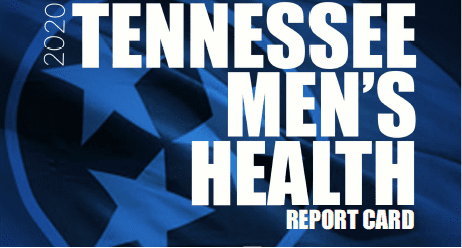
For the fifth year in a row, Vanderbilt University Center for Research on Men’s Health has released a health report card filled with data to guide policy and practice for the improvement of men’s health. Belmont faculty was again recognized as a collaborator who Vanderbilt actively works alongside to develop this report card. 

In a video issued with the press release of the health report, Dr. Derek Griffith, director of Vanderbilt’s Center for Research on Men’s Health, shared that “the report card is meant to stimulate conversations, efforts, policies and practices to improve men’s health, not to just sit on the shelf.” He closes by sharing the goal of the report card is to recognize men’s health in addition to family members and other members of the Nashville community.

Dr. Lorry LiottaKleinfeld, a professor in Belmont’s School of Occupational Therapy who has also served on the advisory board for the last three report cards, shared how hopeful she was that “the report card findings will be carefully considered and will lead to action planning and continued implementation of strategies to promote men’s health.” She emphasized the vital role that students who are enrolled in health-related fields play in promoting health in the future. 

The report card, although focused on men’s health, also provides general information to the public on how to support the health and wellness of everyone. Read some of the key findings here.

Guest Speakers, Belmont Faculty Hold Anti-Asian Racism Roundtable

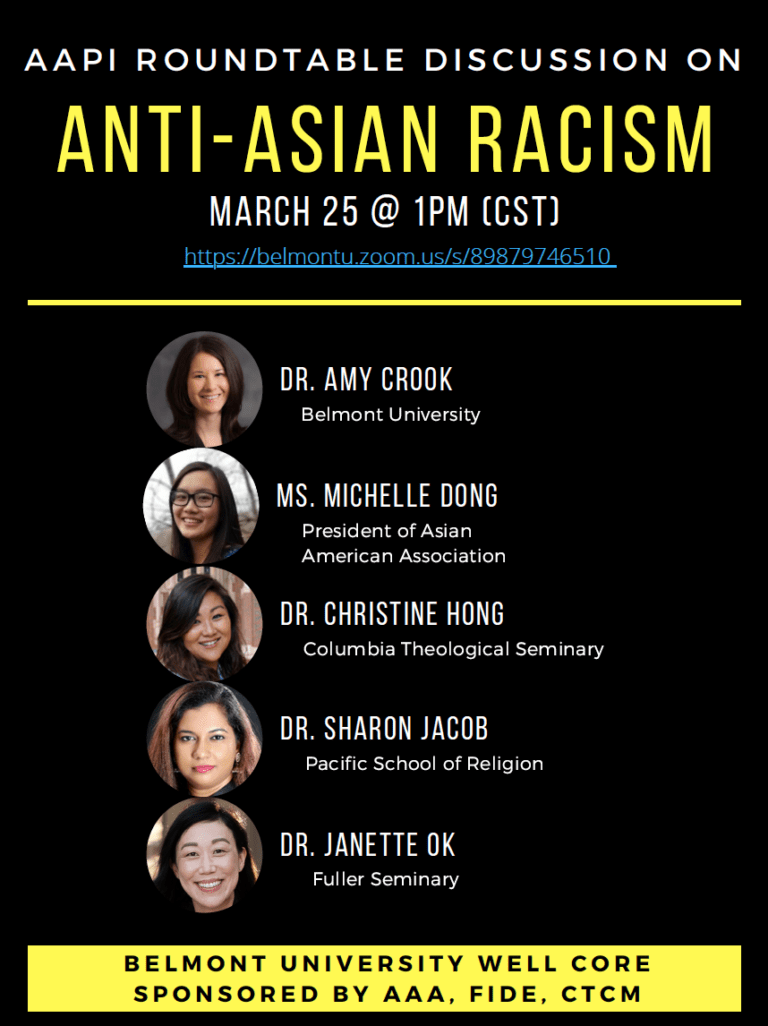
In an effort to create a united support system for the Asian-American community on-campus, Belmont University hosted an Anti-Asian racism roundtable last week, reflecting on the rise of racism and hate crimes again Asian people in America and discussing how the University can create conversation that leads to action for the AAPI community. 

The University invited an all-female Asian race panel of three guest speakers from different colleges and one Belmont faculty member to share their thoughts in a conversation moderated by Dr. Beth Ritter Conn, professor in the College of Theology and Christian Ministry. The guest speakers included UCLA Professor Dr. Janette Ok, Columbia Theological Professor Dr. Christine Hong, Pacific School of Religion Feminist Studies in Religion Professor Dr. Sharon Jacob and Belmont Business Professor Dr. Amy Crook. 

Dr. Ritter Conn started the event by asking the panelists to share their initial reactions and feelings toward the recent Atlanta spa shootings that killed 8 people, 6 of whom were Asian women. Dr. Jacob shared that the feelings of frustration from the Asian-American community towards these hate crimes were present before the Atlanta shootings, but the tragedy sparked further rage around the country. 

The panelists encouraged viewers to advocate for increased diverse faculty at their respective institutions to speak into the students and universities as a whole. “When an institution fails to hire a diverse faculty, the select few diverse faculty members are left to carry the weight,” said Dr. Ok. 

The panelists also touched on the pain and frustration felt by toward media that simultaneously makes Asians hyper-visible and portrays them as perpetual foreigners. Dr. Hong shared, “The media erases us. Many people are not paying attention even though the intersectionality community is screaming at the top of their lungs.” 

Discussing the “model minority,” Dr. Ok shared how difficult it has become for Asian Americans to speak up within their community because it ruins the stereotype of being peaceful. So the Asian community isn’t advocating alone, she urged the Belmont community at large to “be the ally and the friend that has the guts to speak up against AAPI hate.”

From the Christian perspective, each panelist discussed the hurt and damage that toxic theologies of reconciliation have on minority communities. “Real reconciliation always happens on the terms of those who are in a position of most vulnerability,” added Dr. Hong.

Three of the women on the panel shared their approach to constructively supporting the Asian community from a Christian standpoint. “If we think that all our brothers and sisters bear the image of Christ, then we have to be enraged by the hate against them and care for one another,” shared Dr. Ok. “As Christians, valuing brothers and sisters of Christ also means to value the brothers and sisters of other colors.”

Dr. Jacob emphasized the importance of an intersectional perspective, sharing that “when you take race and put it into a black and white dichotomy, people disappear and bodies disappear.” Dr. Crook shared her experience with the lack of intersectional support as she emphasized that no matter what race or how many, all people of minority communities in some capacity need to be uplifted. 

The night closed with guest speakers and Belmont faculty encouraging students, faculty and staff to support Asian organizations on campus such as Asian American Association, Korean Music Business Society, Japanese Culture Club and Chinese Cultural Association. Links were also placed in the chat for all participants to donate to the families of the Atlanta shooting victims and to Asian American Advancing Justice

With the knowledge and wisdom imparted from Asian women, Belmont’s campus community hopes to continue becoming better allies of all minority communities and visibly stands in solidarity with AAPI students, faculty and staff both on and off-campus.

Air Force Research Laboratory Offers Student Internship in Maui

William Mitchell, a Belmont physics and audio engineering double major, recently landed an internship that will take place this summer in Maui, Hawaii. Mitchell will work with the Air Force Maui Optical and Supercomputing Center and its team at the Maui High-Performance Computing Center, participating on-site in the Directed Energy Scholars Program. 

Mitchell will move to the island the second week of May and will be working to apply deep learning and machine learning to space and astronomy. He will focus on applied deep learning for autonomous deep space object detection and identification in low SWaP (size, weight and power) devices. 

Mitchell shared, “I am extremely excited and grateful for the chance to intern at AMOS this summer. The ability to study and work in a place like Hawaii, with a team that is on the cutting edge of their field is certainly an amazing opportunity.” 

Mitchell thanked Dr. Scott Hawley, professor of physics at Belmont, for the experience in research which he believes is the leading reason he was offered this position.

Belmont College of Pharmacy Students Combine Artificial Intelligence and Personal Medicine

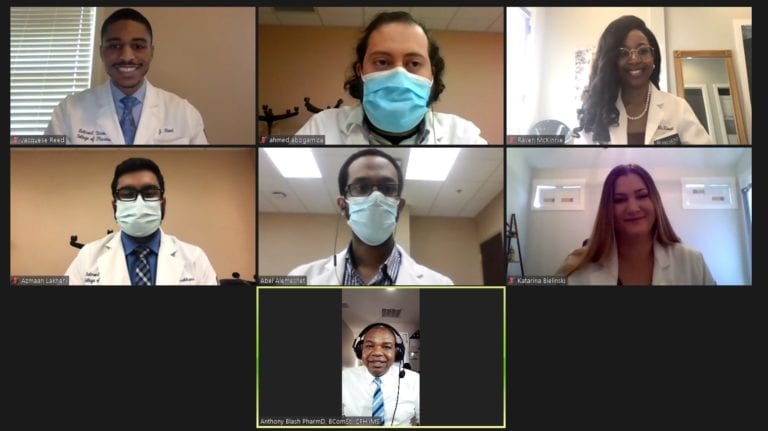
Belmont University College of Pharmacy third-year students Jacquese Reed, Raven McKinnie, Abel Alemeshet, Katarina Bielinski, Azmaan Lakhani and Ahmed Abogamiza took on the task of updating an Amazon Alexa skill for the Top 300 most prescribed drugs, in addition to incorporating recently approved drugs. Upon searching for a particular drug, a user will be given information for proper medication management. This includes storage information, administration techniques, common side effects and when to contact a primary care provider. Such a skill will revolutionize the way patients are able to receive information.

The first Alexa skill at hand was initially developed collectively by a previous informatics group at Belmont. The current informatics team was responsible for updating pertinent information for each medication in addition to creating a separate skill altogether.

“My Medicine Cabinet” is the Alexa skill that contains all of the previously mentioned information in relation to the top 300 most prescribed medications. The skill was updated to reflect current changes in prescribing practices. All of the information contained within the skill is pharmacist verified and available for retrieval upon request. This skill can be accessed at no charge either online or via the Alexa application.

“My Medicine Cabinet Part 2” is an additional Alexa skill that was created for the purpose of reflecting top recently approved medications. The FDA releases this information each year. Relevant data going back to 2015 was examined and incorporated into this skill.

Belmont University’s College of Pharmacy is a HIMSS Approved Education Partner and is the only pharmacy school with a healthcare informatics concentration leading to internationally recognized certification in healthcare informatics. This is often obtained prior to experiential rotations, residency inquiries and job searches begin. Collaboration with a number of organizations takes place and regional partners takes place during the school year.

Belmont’s Pharmacy informatics team collaborates with interested organizations to provide competent student and graduate healthcare informaticians with clinical knowledge as grad-student team members. It plans to expand its program to include residents and/or fellows. This collaboration would be of no cost to the partnering organization and could help advance Healthcare Informatics initiatives currently underway or in the planning phase. To find out more about this exciting opportunity, please contact Dr. Blash at Anthony.Blash@belmont.edu

Carter Serves on Harry S. Truman Scholarship Foundation Review Panel

Dr. Tracey Carter, associate professor of law and Belmont University College of Law’s director of academic success, recently served on the Harry S. Truman Scholarship Foundation’s 2021 Nashville Regional Review Panel held virtually on Wednesday, March 17, 2021.

Carter, a1993 Truman Scholar herself, interviewed thirteen Truman Scholarship finalists from the states of Arkansas, Kentucky, Mississippi and Tennessee, along with the following Truman Scholars who also served on Nashville’s Regional Review Panel in this year’s selection process: David Cooley (Principal, Cooley Public Strategies); Rev. Jennifer Bailey (Founder and Executive Director, Faith Matters Network); Judge Travis McDonough (U.S. District Court Judge, Eastern District of Tennessee); Holly Peña (Co-Founder and Executive Search Consultant, Peña Search Consulting); Carol White (Associate Director of Operations, Tennessee Arts Commission, State of Tennessee); and Dr. Terry Babcock-Lumish (Executive Secretary, Harry S. Truman Scholarship Foundation).

There are currently more than 3,000 Truman Scholars, and the 2021 Class of Truman Scholars will be announced in April.

The Harry S. Truman Scholarship Foundation is the nation’s official living memorial to the thirty-third president and the presidential monument to public service. The Truman Scholarship is a highly competitive national scholarship and is considered “the premier graduate fellowship in the United States for those pursuing careers as public service leaders.” The Harry S. Truman Scholarship Foundation awards merit-based scholarships to college students who plan to pursue careers in government or elsewhere in public service. Truman Scholars receive up to $30,000 for graduate or professional school, participate in leadership development activities and have special opportunities for internships and employment with the federal government.

For more information about the Truman Scholarship, visit https://www.truman.gov/.

Belmont Professor Bursch Receives 2021 APTA Hall of Fame Award

Gail Bursch, professor in Belmont’s School of Physical Therapy, was recently presented with the 2021 Hall of Fame Award from the American Physical Therapy Association of Tennessee. The award is granted to an APTA TN member who has a minimum of 25 years of continuous contribution to APTA TN as a clinician, educator, clinical educator or a combination of these roles. 

Previously, Bursch became a national trainer for the APTA Credentialed Client Instructor Program and has taught more than fifty clinical instructor credentialing courses. 

The recipient must also have a history of service to the APTA TN Board of Directors, contributions to the growth of the profession through the formal state, national or international presentations and demonstrated exceptional contributions to APTA TN and the profession.

Secret Link