

Steven Kern Shaw estate donates $10.5 million collection to University that includes iconic vintage guitars, mandolins and other fretted instruments
Hot on the heels of last week’s CMAs and Belmont’s announcement that it’s a major sponsor of Ken Burns’s “Country Music” documentary, the University again shows the depths of its Music City connections with news this week of plans to open a new and extensive vintage instrument-focused museum. The gift of nearly 500 historically significant instruments and supporting endowment—amounting to a total value of approximately $10.5 million—comes from the estate of the late Steven Kern Shaw. Shaw was a collector, philanthropist and the grandson of Broadway composer Jerome Kern who was one of America’s foremost composers of musical theater and popular music (responsible for such classic songs as “Ol’ Man River,” “The Way You Look Tonight” and “Smoke Gets in Your Eyes”).
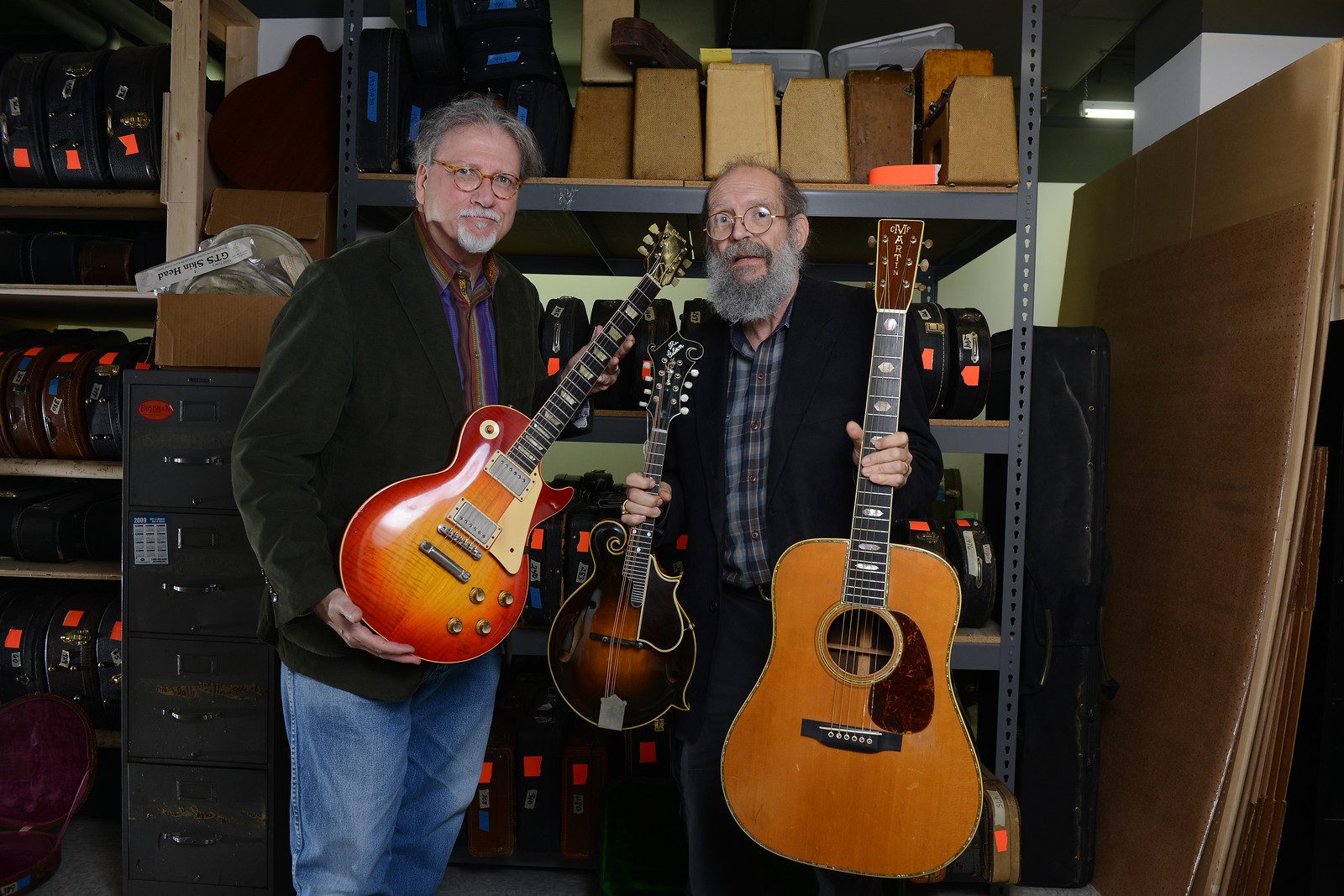
The Shaw collection consists primarily of iconic 20th century American-made guitars and mandolins, including:
- Six Gibson F-5 mandolins signed by Gibson’s acoustic engineer Lloyd Loar made in 1922-24. Loar-signed F-5s are considered by many to be the finest mandolins ever made.
- Two sunburst finish Gibson Les Paul Standard guitars made between mid-1958-60. Considered by many collectors to be the finest solid body electric guitars ever made.
- Seven extremely rare F-5 mandolins with fern pattern peghead inlay made from 1925 through the mid-1930s.
- Numerous vintage Fender Telecaster and Stratocaster guitars including a very fine 1955 Stratocaster and 1952 Telecaster.
- Eight pre-WWII Martin 000-45 guitars, the finest and most ornate Martin guitars made in the 15 inch wide 000 size.
- Four pre-WWII Martin D-45 guitars made mid 1930s through 1942. Considered by many collectors to be the finest steel string flat top acoustic guitars ever made.
- 43 mid-1930s through mid-1940s Martin style D-28 guitars with herringbone top trim. Considered by many collectors and musicians to be the finest bluegrass guitars ever made.
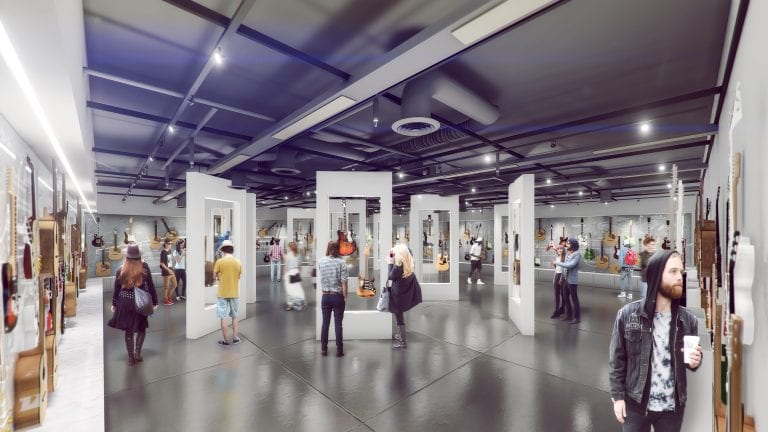
Family friend George Gruhn, founder of Gruhn Guitars and vintage instrument expert, serves as co-executor of the estate and noted that Mr. Shaw’s will specified his desire that these instruments be donated to an institution capable of properly exhibiting and caring for them, preferably in the Nashville area. Beyond conveying the important history and design of these instruments, the new Belmont museum will be interactive, bringing new life and music to these unique, irreplaceable guitars and mandolins rather than merely displaying them behind glass.
Gruhn said, “These instruments are to be played and heard in concerts and recordings as well as to be available for students, musical instrument builders and scholars to study, play and learn from association with them. Belmont University was the natural choice for a permanent home for this collection. Belmont draws students and scholars from around the world and is noted for the excellence of its College of Entertainment and Music Business and the College of Visual and Performing Arts which can incorporate aspects of this collection into their curriculum.”
Belmont President Dr. Bob Fisher added, “What better place to celebrate the history and design of such vintage instruments than Belmont University, the educational home of so many talented artists and musicians. I am grateful to the Shaw estate for allowing us to display pieces in the way they deserve while also keeping their music alive through the hands of the students, faculty and artists who visit the museum or are loaned these iconic pieces of music history.”
This will be the first instrument-driven museum of its kind to open in Music City, and Gruhn noted his belief that it “has the potential to be one of the finest fretted instrument collections in the world.” The museum will seek to highlight the artistic and scientific design of the pieces while also promoting usage of the instruments. In fact, plans for the museum even include a performance space where many of the instruments will be played by both well-known and student musicians, and several of the instruments will be available for students, faculty and musicians to borrow for recordings and concerts.
Butch Spyridon, president and CEO of the Nashville Convention & Visitors Corp., said, “I can’t think of a more fitting addition to our city’s world famous brand. Belmont has long preserved, advocated and educated in the world of music, and now they can add ‘museum quality exhibit’ to their music offerings. We could not be more proud of our partner, member and neighbor.”
Gruhn and New York-based attorney Andy Boose are co-executors of the estate, and they will serve as part of a seven-member advisory board that also includes recording artist Vince Gill and Belmont administrators. The board will oversee the management of the collection. The museum is slated to open in Spring 2017 in Belmont’s Bunch Library with an original display of instruments from the Steven Kern Shaw collection. Future plans for the museum may include audio/video recordings to supplement displays, the establishment of an annual concert series and the development of archived recordings featuring the instruments.
The Shaw estate donation marks another significant addition to Belmont University’s ongoing “We Believe” fundraising campaign, which seeks to raise $300 million for the institution by 2020.
 Club members recently served a pasta bar for the residents at Hope Lodge, an arm of the American Cancer Society that provides free housing and services to cancer patients during their treatment. While there, students served and spent time with Lodge residents. Throughout the year, AED provides multiple meals for the Lodge.
 Additionally, AED participated in Vanderbilt’s Heart Walk, a 5k fundraiser for the American Heart Association. AED members participate in this event annually. Of this event Rasner said, “As with any of our service events, serving with your peers always helps build friendships, and that is also so great to see and be part of.”




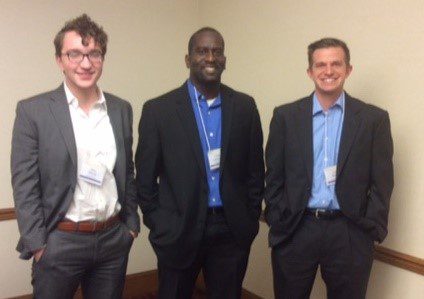
 Marsh, an economics major and math minor, presented two papers titled “But Why Is The Rum Gone? An Estimation of the Price Elasticity of Demand for Wholesale Liquor in Iowa” and “Which Will It Be: The Empire Strikes Back or The Son of the Mask? Maximizing Movie Sequel Sales at the Box Office.” In the first paper, Marsh measured the price elasticity of demand for wholesale liquor in Iowa in 2015 which measures the response of consumers to changes in price of a good. Using regression analysis, the price elasticity of state-monopolized wholesale liquor ranged from -0.20 to -0.40, with most of the changes passed to consumers. He also found that previous liquor orders are good indicators of future orders.