IMPORTANT NOTE: These are the archived stories for Belmont News & Achievements prior to June 26, 2023. To see current stories, click here.

Home Blog Page 313

Belmont Collaborates with General Council on Finance and Administration on International Business Studies

Belmont University’s Jack C. Massey College of Business will collaborate with the General Council on Finance and Administration (GCFA) for a project in the spring of 2017. 12 MBA candidates, who have designated international business as their track of study, will define issues, conduct research and analysis and offer recommendations on the expansion of Shared Services throughout the global United Methodist denomination. The students will do research originally in the Philippines Central Conference.

GCFA is focusing attention on ways the denomination can reduce administrative costs through offerings of Shared Service. The objective of all Shared Services is to make available funds for local church ministries that will have an impact on connectional giving as well. While many of the current projects are available to U.S. churches, this project will focus exclusively on the feasibility of expanding services globally.

Jeff Overby, Director of the Center for International Business at the Jack C. Massey College of Business said, “We are honored that GCFA leadership has offered to partner with Belmont University for this year’s practicum project. This unique experiential learning opportunity enables our MBA students to strengthen their consulting and project management skills while also learning to navigate within an international and cross-cultural context. Students will be working on a project that will not only benefit a respected global organization such as GCFA, but has the potential to positively transform individual lives in the Philippines.”

For the Belmont MBA students, the for-credit course provides an opportunity to offer professional quality consulting services to an international entity like The United Methodist Church. For GCFA, it is an opportunity to research the viability of expanding existing and developing new shared services to the denomination.

Moses Kumar, GCFA general secretary and treasurer said, “We look on this opportunity as another way to join communities of faith in finding new and innovative ways to expand ministry globally. We are blessed in Nashville to have many great United Methodist churches and general agencies. We are also blessed to have other faith communities that share our belief that the world is our parish. We look forward to the results and examining how we can share administrative services throughout the denomination.”

Tarr Presents Abstract at Acoustical Society Conference

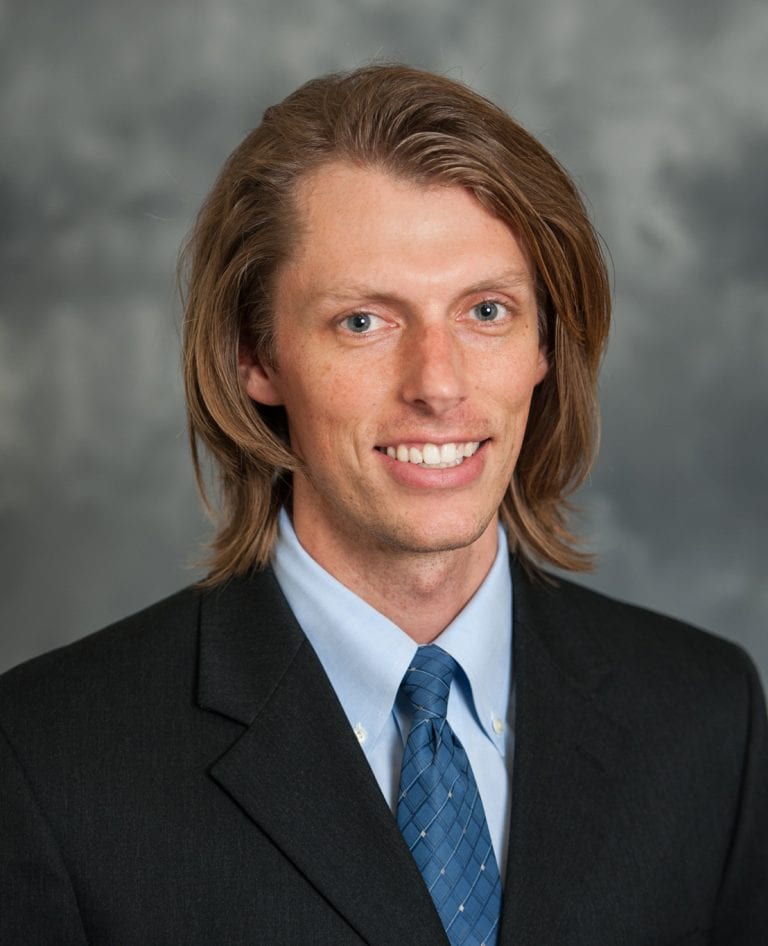
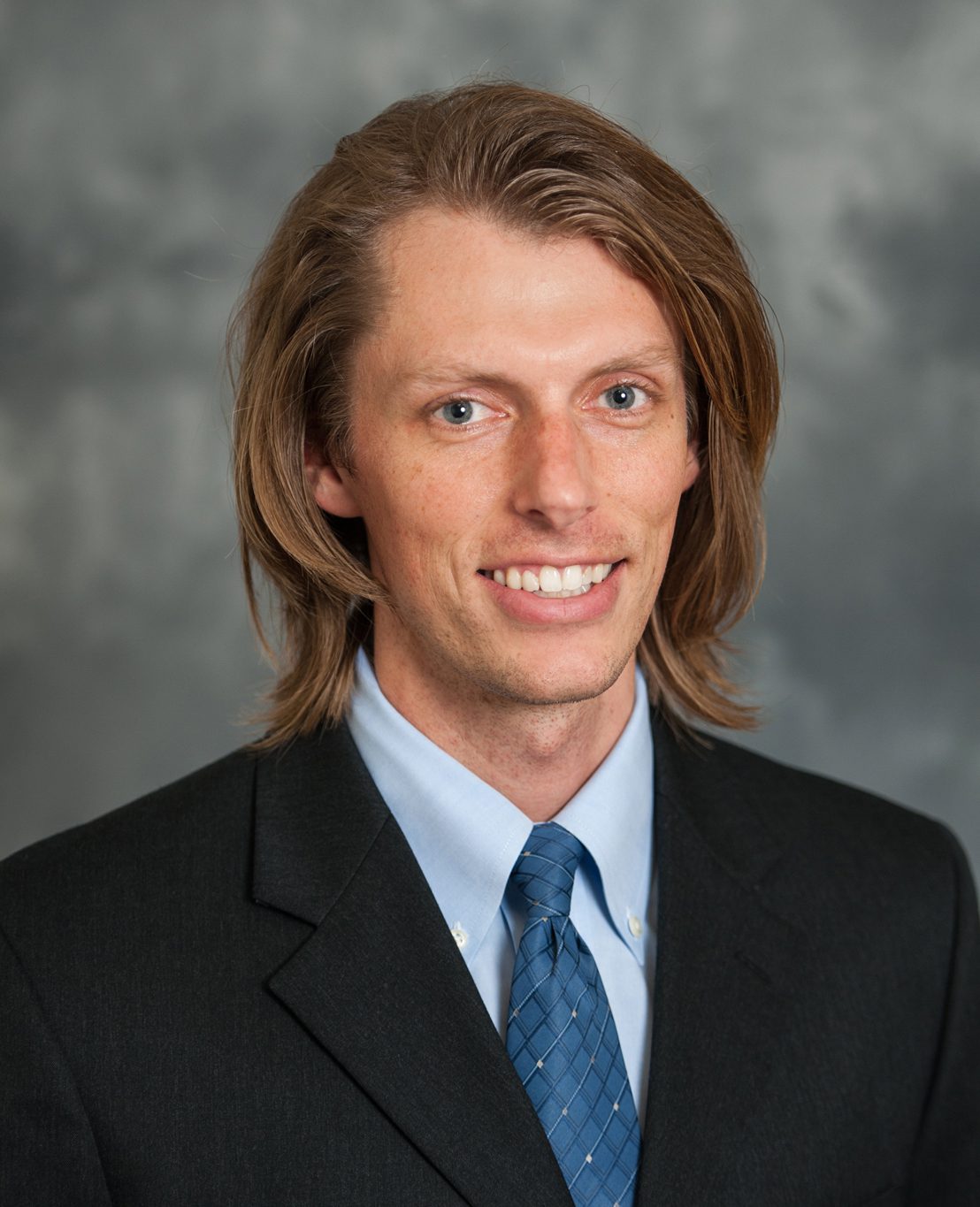
Tarr's faculty headshotAssistant Professor of Audio Engineering Dr. Eric Tarr recently traveled to Honolulu, Hawaii to give a presentation at the Acoustical Society Conference. The conference was co-sponsored by the Acoustical Society of America and the Acoustical Society of Japan.

Tarr’s presentation was titled, “Teaching Computer Programming to Audio and Acoustics Students at Belmont University” and described the unique coursework he created to expose undergraduate students in the Audio Engineering Technology program to programming and digital signal processing. The presentation was based on a published abstract and was included in a special session on “Using Computers in Acoustics Education.

Belmont Replaces Garage Lights with LED Fixtures

Belmont University recently replaced metal halide lighting fixtures and lamps in both the Curb Event Center Parking Garage and the North Garage with LED fixtures that will cut both energy use and utility costs for the university. The project was eligible for two grants from the Tennessee Valley Authority’s (TVA) Energy Rights Solution Business/Industry Program that helped to cover the initial costs of installing the technology. The grants cut the initial costs for switching the fixtures by approximately 25 percent.

The project took place over 90 days and required multiple visits and verifications by TVA representatives to ensure the replacements were meeting the required grant standards. The new bulb fixtures will require less than half the energy used by the previous fixtures. More than 680 fixtures were replaced in total.

Wacholtz Publishes 9th Book, Schneller Serves as Editor

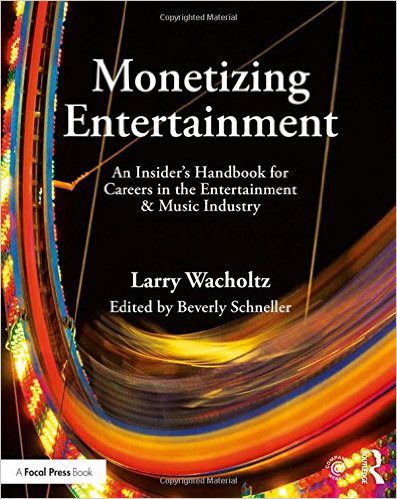
The cover of Wacholtz's book, "Monetizing Entertainment"Professor of Entertainment and Music Business Dr. Larry Wacholtz recently published his 9th book, titled “Monetizing Entertainment.” The publication serves to guide readers through the current state of the music industry and emerging trends by analyzing its transition from a traditional business model to a more entrepreneurial, “do-it-yourself” model. Wacholtz discusses topics including intellectual property rights and digital streaming and offers advice for developing a career as an artist, technician or industry executive. Dr. Beverly Schneller, Belmont’s associate provost for academic affairs, served as the editor for the book, which was released on Nov. 11.

Wacholtz has written several books on different topics within the music business including “Off the Record (3rd Edition),” which he co-authored with Assistant Professor of Entertainment Studies Mark Volman. Some of his other titles include, “How the Music Business Works,” “Inside Country Music” and “Star Tracks: Principles for Success in the Music & Entertainment Business.”

For more information on “Monetizing Entertainment” or to purchase a copy, click here.

Student Group Wins National CSR Campaign Competition

Students from Dr. Jeremy Fyke’s corporate social responsibility (CSR) class recently participated in Ketchum Public Relations’s CSR campaign competition. Based in New York and Chicago, Ketchum’s “Mindfire” competition partners with public relations and corporate communications classes at colleges and universities across and country and engages students in projects to develop campaigns and initiatives for clients in real time.

This semester, Belmont participated in the competition for the first time, and Fyke’s class piloted a CSR-based Mindfire challenge where they developed corporate CSR initiatives for their clients. One team was selected as the winner of their contest, and their idea will be pitched to the client. Additionally, the students on the winning team received one-on-one informational interviews from Ketchum executives to explore future career possibilities.


Communication Students Collect More Than 4000 Books for Local Non-Profit

Students in Dr. Nathan Webb’s Teamwork in Organizations class collected 4300 books as part of a semester-long, service-learning project. The students held the book drive for a local non-profit, Book’em, whose mission is to create “a more literate Nashville by helping economically disadvantaged children, from birth through high school, discover the joy and value of reading through book ownership and enthusiastic volunteers.”

The course has partnered with Book’em for four semesters and has collected almost 15,000 books for the organization.

Ferrells’ Research Featured in Canadian Accounting Magazine

Drs. O.C. and Linda Ferrell recently had their research on the effectiveness of the Sarbanes-Oxley Act featured in the mid-October issue of the Canadian accounting magazine The Bottom Line. The full-page article discussed the significance of the Ferrells’ research and their subsequent conclusion. Both O.C. and Linda are Belmont University distinguished professors of leadership & business ethics.

The goal of the Ferrells’ research on the Sarbanes-Oxley Act, passed in 2002, was to determine the effectiveness of the new law requiring companies to state whether they have adopted a specific code of ethics for principal, financial and accounting officers. Section 406 of the act, the section the study focused on, was intended to assist in reducing financial misconduct and address inherent risks public companies face in finance and accounting.

The Ferrells’ study began in 2005 and lasted for 11 years, reaching the conclusion that Section 406 of the Sarbanes-Oxley Act was indeed effective in lowering the restatement of earnings often associated with financial mismanagement.

For more information on the Ferrells’ research and findings, click here.

Belmont to Celebrate December Commencement

0

Belmont University will hold its December 2016 commencement ceremony for graduate and undergraduate students at 5 p.m. on Friday, December 16 in the Curb Event Center. The University will celebrate the graduation of a total of 401 students. Conferred degrees include 339 bachelor’s, 59 master’s and 3 doctoral degrees.

Dr. Robert C. Fisher, president of the University, will preside over the event. Dr. Marieta Velikova, associate professor of economics, will present the commencement address. Velikova is the 2015-2016 Chaney Distinguished Professor recipient, a title awarded for each year to the faculty member who best represents the University’s vision to be “a premier teaching institution.”

Watch a live stream of commencement by visiting www.belmont.edu during the graduation ceremony Friday evening.


Students Present Research at Undergraduate Symposium

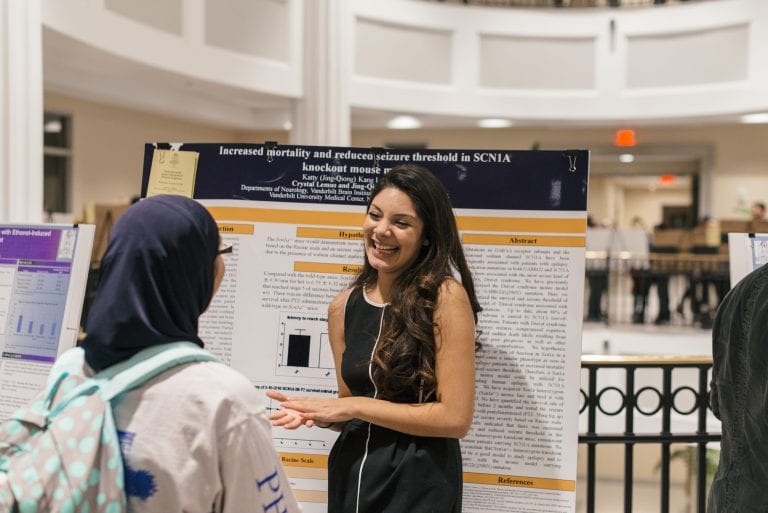
Belmont recently hosted its Science Undergraduate Research Symposium (SURS), an opportunity for students to present their research from the fall semester. Held each fall for the last 12 years, this year’s event featured a Keynote Address from Dr. Stephen Carlson, a Belmont alumni, medical writer and consultant for Whitsell Innovations. Carlson delivered “Molluscs to Mice: What Model Organisms Can Tell Us About The Brain and Behavior.”

 This year’s event saw more than 80 student entries with posters and oral presentations given in eight categories including biology, biology & molecular biology, neuroscience, chemistry and physics, environmental science, honors, mathematics & computer science and psychological science.
Presented research included:
Biology:
  • “Decomposition Rates of Acer Saccharum and Lonicera Macckii in Mixed Litter Bags,” Anna Anderson
  • “Convallatoxin induces apoptosis in HCT116 colorectal cancer cells,” Sarah Anderson
  • “Seeking Behaviors of Nicotine,” AJ Arnold
  • “The effects of isoflurane on spatial learning and short-term memory in Danio rerio,” Curtis Brown
  • “Disinhibition by Ethanol on C. elegans Towards Bacillus thuringiensis,” Samantha Bush
  • “The Response of a Native and Exotic Snails to a Native Crayfish Predator,” Jasmine Conyers
  • “The Effect of Piracetam on Danio rerio with Ethanol-Induced Memory Impairment,” Mohamed Darwish
  • “Effect of Sodium Chloride Levels on Anxiety in Zebrafish (Danio rerio),” Austin DeMaagd
  • “The effect of a trophic cascade and intraguild predation on the survival rate of the Southern Oyster, Crassostrea virginica,” Kristen Estes
  • “Occurrence and Relative Abundance of Parasitic Leeches (Hirudinea) on Aquatic Turtles in a Wetland Environment in Tennessee,” Laura Horton, Nicole Witzel, Jeronimo Silva
  • “The effect of caffeine on motor movement of Caenorhabditis elegans,” Madeline Johnson
  • “The response of naive and experienced snails to a predator cue,” Shirley Kyere
  • “Increased mortality and reduced seizure threshold in SCN1A knockout mouse model,” Crystal Lemus
  • “Effects of Epigallocatechin-gallate and Enoxacin on HeLa cells,” Anna Margaret McDonnell
  • “Treatment effects of emetine on HCT-116 cells,” Kerry Sommers
  • “Examining behavior syndromes in Orconectes durelli crayfish,” W. Kody Muhic
  • “The Effects of Fertilizer on Decomposition of Native and Invasive Exotic Plant Species,” Gary W. Noel
  • “Detection of Respiration in C. elegens and the Effects of Different Sugars and E. Coli,” Prisha Patel
  • “Differences in Plant, Microinvertebrate, and Microbiota Diversity on a Well-Established Green Roof and a New Green Roof,” Sargoel Rezanejed
  • “Comparison Between EStablished Versus Newly Created Green Roofs Focusing on Microbiology, Macroinvertebrates and Green Roof Flora,” Kelsey Saint Clair
  • “Caffeine’s Effect on Chemotaxis of C. elegans at Various Stages of Life,” Emily Shearon
  • “Expansion on the Nematode Scent Detection Test: Evaluating C. elegans Attraction to Non-Small Cell Lung Cancer,” Brian Song
  • “Behavioral syndromes of Elimia snails in response to Crayfish predation threat,” Ryan Tapley
  • “Effect of Sedum rupestre on Non-Sedum Dianthus kakori When Planted Together on an Extensive Green Roof,” Laura Horton, Caroline Glover, Dylan Adler
  • “The Mostt-terious Effect of Herbs on a Green Roof,” Sandra Bojic, Kerra Gaona, Kelsey Saint Clair
  • “Mosses and Sedum Affect Green Roof Substrate Temperature,” Bethany Strother, Kylie Lawrence, Sara Haney

Biochemistry and Molecular Biology

  • “Insight Into the Chemotaxis of Caenorhabditis Elegans Toward Pathogenic Bacillus Thuringiensis Strain 4A4 Using Chemosensory Deficient Nematodes,” Stacey Crockett
  • “Catechin Isolation of Rosa damascena Implies Novel Melanoma Prevention,” Nick Orji
  • “Isolation of Catechins from Granny Smith Apples for Analysis of Inhibition of Tyrosinase,” Sarah Maxwell

Neuroscience

  • “The Relationship Between Acute Stress and Behavioral Sensitization in Apomorphine Treated Danio rerio,” John Longenecker
  • “Chemotaxis of Caenorhabditis elegans with Bacillus thuringiensis 4A4 in vegetative and sporulated growth stages,” Meghan McGrath
  • “Investigation of p53 activation in HCT116 with the sesquiterpene Beta-Caryophyllene,” Diana Neculcea
  • “The Effect of Anandamide on Working Memory in Danio rerio,” Sam Zacovic
  • “The Effects of Dopamine on Learning and Certainty in Zebrafish,” Stephanie Morin

Environmental Science

  • The impact of a reduced tree canopy cover on the composition of stream macro invertebrate communities,” Sandra Bojic
  • “The effect of size on the antipredator of the snail, Elimia laqueta in response to predator cues,” Joanna Sorrell

Chemistry and Physics

  • “Comparison of Baseball Helmets Padding Using Force Sensors,” Nicholas W. Egli
  • “Physics in Tennis: Analyzing and Modeling Tennis Shots,” Cedric Dujacquier
  • “Computer Simulations and Best Practices for College Physics,” Jonathan Rankin
  • “Cost-Efficient Microfluidic Devices to Determine Growth Rate of Yeast Cells and Sort Microbeads by Size,” Hannah Burnette, Kara Garrett
  • “Development of a Model Metal Amine Complex and Projections of Physical Properties viz Density Functional Theory Algorithms,” Emily Cottingham
  • “Synthesis, characterization, and unusual solvation and luminescent propertise of terbium amine complexes,” Libby Ligon
  • “Symmetry breaking in nanorod synthesis using metal salts,” Sarah A. Cannavino
  • “Greening the Synthesis of Virstatin: Finding an Alternative Solvent to Dimethylformamide,” Morgan MaCauley

Honors

  • “Effects of Creativity on Stimuli Recognition in Clouds,” Shannon Kelley, Suzanna Stapler, Meredith Edwards, Taylor Brown
  • “The Effects of Sound Perception on Shape Identification,” Dora Mae Geving, Sean Grossnickle, Mackinna Hart, Alex Lachmandas
  • “Effects of Visual, Auditory, and Visual-Auditory Semantic Satiation on Perceived Relatedness of Word Pairings,” Dlyan Arndt, Allison Kurtz, Koby Langer, Riley Wallace
  • “Effects of Speech Speed on the McGurk Effect,” Clara Leonard, Tristan Kinnett, Sarah Everett, Chloe Garbe
  • “Effects of Fear-Inducing Stimuli on Perception of Ambiguous Figures,” Cole Fuller, Katie Wynn, Randy Westergaard

Mathematics and Computer Science

  • “The NFL Combine from 1999-2016: A View Through Data Analysis,” Grant VanderKallen
  • “DeepDSP,” Corey Sery, John Ottenlips
  • “Connect 4,” Simeon Fritz, Whitt Kinley
  • “An Interactive Sudoku Game and Problem Solver,” Sean Conklin, Andy Porter
  • “Alphametric Problem Solver,” Zayne Anderson, Joe LaMartina, Grant VanderKellen
  • “Teeko: An implementation of Alpha Beta Pruning in Python,” W. Hess, N. Karman, K. McLean
  • “Pente,” Amber Blue, Abbey Miles
  • “A Comparison of Heuristic Functions for the Game ‘Mancala’,” Chandler Capps, Luke Johnson
  • “Linearization and Solution Approximations for Nonlinear Differential Equations,” Allison Hardee
  • “Creating a Model for the Dissemination of Ideas Using a System of Linear ODEs,” Tucker Dowell
  • “Using and Analyzing Random Graphs to Simulate Social Networks,” Tucker Dowell
  • “An Algebraic Model of Musical Symmetry,” Brandon Stephens, Peter Eigel
  • “Algebraic Combinations in Basic Groups,” Tucker Dowell

Psychological Science

  • “The Effect of Social Media Content on Mood,” Kara Garrett, Kendyl Matthews, Hannah Johnson, Dallas Mattern
  • “You Are What You Eat: Gustatory Disgust and Pleasure Influence Moral Judgment,” Marie Boutard, Christian Candler, Bailee Ficzere, Daniel Mata
  • “Effects of Social Media on Self Preservation,” Emilee Filspart, Mary Ellen Manor, Hayden Tucker
  • “Emotional Response to Color,” Sielo M. Coleman, Ashtin Faulkner, Andrew Dudey, Kaitlyn Bayus
  • “Emotional Response to Sound Frequency Manipulation,” Mekenzie Meadows, Gabby Gonzalez, Darby Maggard
  • “Acknowledgement of One’s Own Racial Baises Effect on Group Selection,” Candace Hearn, Maeve Fitzpatrick, Allison Ramsey, Ellyn Webster
  • “The Art of Kindness: The effects of interpersonal compassion on self-compassion,” Kathryn Dickerson, Paige Robinson, Rachel Holloway, Monica Anis, Alejandra Cota
  • “The Impact of Gender Stereotypes on Empathic Accuracy,” Amber Lowe, Ragan Wilson, Marie Holzer, Janai Todd
  • “Social Desirability and Maladaptive Humor,” Brittany Lebhar, Kyle McLean, Stephane Morin, Rosaline Prophete, Michael Rasille
  • “Virtual Reality and Narrative,” Sydne Richardson, Thomas Diez, Kyle Bailey, David Vogel
  • “Conformity: Private Attitudes and Public Intentions,” Piper Cleveland, Quinn Forrer, Eric Patterons, Cille Taylor
  • “Interpersonal Attraction and Biographical Memory Recall,” Hannah Branthwaite, Reed Priest
  • “Belmont University Maladaptive Perfectionism Scale,” Reed Preist, Kathryn Graeff, Florence Matthews, Hannah Branthwaite
  • “Confidence and Method of Viewing Faces on Facial Recognition Accuracy,” Carmey Davisson, Marily Lauterback, Meghan McGath, Reed Priest
  • “Shame and Nonconscious Behavioral Mimicry,” Brittany Yeager, Kathryn Graeff, Faith Pollard, Carleigh Schuman, Martina Kenner
  • “The Effects of Music Congruity on a Lexical Learning Task,” Benjamin Burdalic, Daisha Cane, Martina Keener, Diana Neculcea
  • “The Effect of Facial Affect on Situational Empathy,” Isabelle Fauchet, Liz Hughes, Denisha Morris, Diana Neculcea
  • “The Effects of Classical Music on Y-Maze Learning in Lab Rats,” Ty Vogel, Carolyn Stewart, Skirley Kyere, Isabelle Fauchet, Faith Gibson, Liz Markelova
  • “Validating the Situationally-Oriented Survey of Delay of Gratification,” Ragan Wilson, Conor Kelly, Carleigh Schuman, Carmen Davisson, David Tronsrue
  • “Gender Stereotypes and Speech Perception,” Emy Gildea, Abigail Smith, Yasmin Telwar, Conor Kelly
  • “The Development and Evaluation of the Academic, Relational, Occupational Entitlement Scale,” Benjamin Burdalic, Seth Schrader, Abigail Smith, Lizzie Weintraub
  • “Mind-Body Dualism and Driving Behavior,” Seth Schrader, Andrea Franjic, Austin Townsend, Jazmine Niazi
  • “The Development of a Measure of Interpersonal Dependency,” Allison Holmes, Marilyn Lauterbach, Seth Strobel, Krista Tice, Matthew Williams
  • “Stress and Sleep Correlational Study,” Andrea Franjic, Meghan McGrath, Mikayla O’Malley, Florence Matthews, Seth Strobel
  • “The Relationship Between the Quality of Sleep, Moringness and Eveningness, and Performance on a Visual-Motor Task,” Jessica Andree, Chelsey Deloney, Sally McCabe, John Longenecker

Chinese Exchange Students Reflect on Life as Bruins

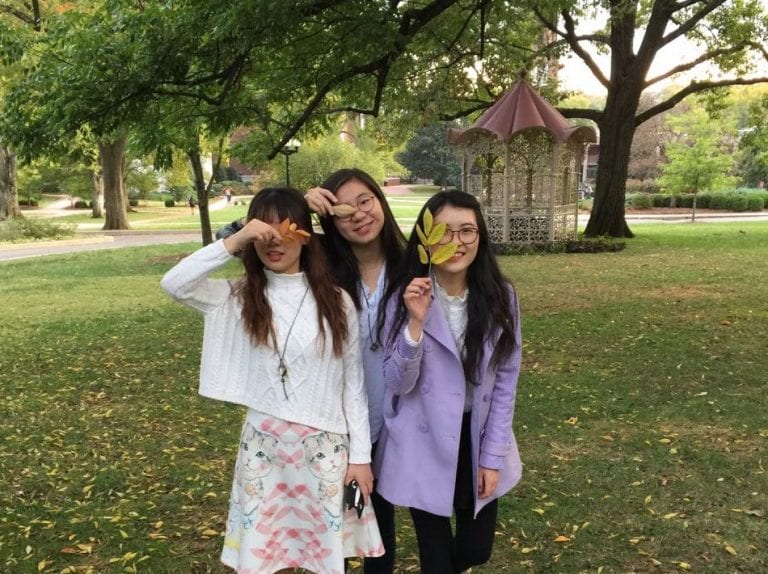
As a result of Belmont University’s new international exchange partnership with Zhengzhou University located in central China, four Chinese students had the opportunity to travel to the United States to become official Belmont Bruins for the fall semester.  Since their arrival in August, they have been in the process of adjusting to differences in cultural customs, school workload and new academic expectations.

Zhengzhou University students Ivy, Estelle and Verona, all junior English majors, first learned about the opportunity to come to Belmont when they were required to attend a lecture given by an American educator, Dr. Ronnie Littlejohn, who is the director of Belmont’s Asian Studies Program. Ivy said she grabbed the hands of her two best friends, Estelle and Verona, when Dr. Littlejohn began talking about Belmont and said to them, “We have to go.”

The next several months were full of challenges as the students tried to obtain U.S. visas during their finals week and prepared to take the International English Language Testing System (IELTS) exam. Verona recalled the uncertainty she felt during the process of preparing to travel abroad. “I was not sure if I should take the risk to come to Belmont or not. After all, it was my first time to study abroad and the brutal fact I had to face was that I needed to study together with American college students, with whom I felt sure I was not on the same level,” Verona said. “I was also afraid that I would not be able to keep up with the professor completely.  Still, I thought, I am 20 years old. I am not a child anymore. My desire to see the outside world drove me to be brave.”

Ivy, Estelle and Verona met freshman Olivia, who was also traveling to Belmont from Zhengzhou, when they arrived in the U.S. The four were moved into Thrailkill Hall and began their experience of learning more about the American way of life.

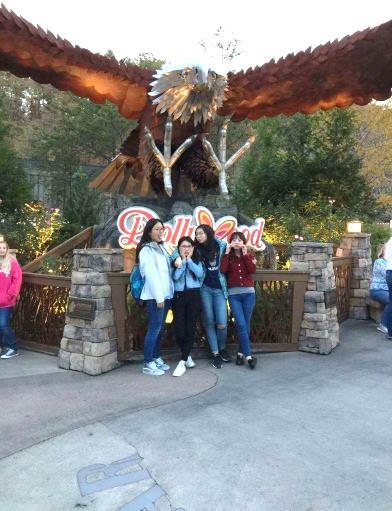
Estelle, Verona, Olivia and Ivy standing in front of a Dollywood signThe first few weeks were not easy, as the students faced challenges with making friends, handling the amount of assignments they received and trying to understand the overall culture they were surrounded by. One thing that threw them off guard was the difference between American and Chinese greetings. “Almost every American I met would ask ‘How are you today?’ and then gave me a hug even if we just met each other for five minutes,” Ivy said. “Though I felt a bit weird with this unusual ritual, I would still answer their question seriously. But I found out that usually they wouldn’t listen to what I said and they kept moving, which made me feel awkward and confused. In China, when we ask another person this question, we want to know more about that person’s answer. Here, it simply is a way of greeting.”

The students also struggled with the difference in workload in their Belmont classes. They weren’t used to the amount of preparation work they had to complete before each class, and they had never heard of MLA format as a style of writing. Ivy mentioned that these academic barriers were stressful for her as she had been top of her class at Zhengzhou and felt a pressure to keep up with her own academic standards.

One of the connections the students established during their time at Belmont, however, helped to ease their minds about some of the struggles they were facing. Dr. Qingjun Li, associate professor of Asian studies and Chinese language, was a professor at Zhengzhou University before coming to Belmont to pursue her master’s degree. The students were able to seek Li’s advice and reassurance throughout the semester to help get them through the days that were challenging.

Estelle, Verona, Olivia, Ivy and Littlejohn on horseback in the Smokey Mountains

Aside from their lives as students at Belmont, Estelle, Ivy, Olivia and Verona were able to spend several weekends traveling and exploring other parts of the state and country. They went horseback riding in the Smoky Mountains, explored the vast wonders of Dollywood and even took a trip to New York City. They have cherished the time they’ve spent immersed in American culture and are sad to leave campus after final exams end. “I have been at Belmont for nearly four months now. It is more and more like a home for me,” Ivy said. “It is really surprising when you are not ready to leave a place to which you were not ready to come at first. It is always hard to say goodbye. But I have heard it said that we leave something of ourselves behind when we leave a place. We stay there, even though we go away. I appreciate that I have had a chance to leave part of me in this beautiful campus and the memories of this past semester will be my lifetime treasure.”

Littlejohn reflected on the ways in which he saw the students grow over their time at Belmont. “Our first semester with the Zhengzhou University exchange has been an unqualified success. The Chinese students have showed great courage and adventure, branching out from courses in English literature to communications, critical thinking in the Philosophy Department, and three of them have studied French.  All of these courses will go back to their home university and count on their degree plan.”

Belmont currently has 21 international exchange partnerships with some of the most prestigious universities across the globe and its international education program is continuing to flourish. During the fall semester, Belmont took in 23 international exchange students, which is the most the university has ever taken in at a single time. Belmont also sent out 10 students as a result of these partnerships. With partner agreements with universities in countries like Hong Kong, Denmark, Spain, Australia, France and many others, students have more opportunities than ever to increase their global awareness. These agreements also allow Belmont to exchange knowledge and research with other leading universities around the world.

Director of International Student Services Dr. Kathryn Skinner said that most partnerships begin with some kind of academic connection, usually through a faculty member who has contacts at an international institution. The department looks to build partnerships with universities that have similar philosophies and characteristics as Belmont, such as the size of the school and the surrounding environment, to make the transition easier on students. Skinner says the goal of bringing international students to Belmont is to enrich the campus community and help lessen uncertainties and stereotypes that students may have about other cultures or parts of the world. She described it as a way for students who can’t participate in study abroad programs to increase their global awareness without leaving the country.

For a full list of Belmont University’s exchange partners, or for more information about applying for programs, click here.


 

Secret Link